

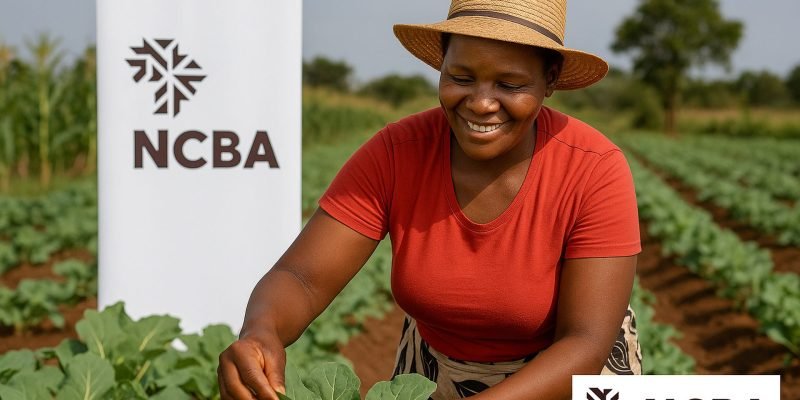

Financing For Agribusiness With NCBA
Financing For Agribusiness With NCBA
Employing over 70% of the rural population, agriculture is now the backbone of Kenya’s economy.
However, many agripreneurs, especially youth and smallholder farmers, struggle to access the capital they need to scale. The good news? More institutions are stepping up to offer targeted financial solutions.
Agriculture NCBA Corporate Banking, Sector Head, Mr. William Muguima has shared invaluable guidance for agribusiness owners aiming to secure financing and scale their operations.
‘NCBA Bank is meeting the financing needs of this sector through a value-chain approach and flexible credit assessment.” Explains Muguima
Whether you’re running a small family farm or scaling up a commercial agricultural venture, this is your go-to guide for unlocking financial support from NCBA.
Financing Across the Value Chain
NCBA’s agri-financing model covers multiple stages:
- Production: Loans for seeds, fertilizer, machinery, and other farm inputs.
- Processing: Financing for value addition like grain milling, fruit canning, and fresh produce packaging.
- Distribution: Support for transport, storage, and marketing of farm goods. NCBA leads in asset financing, accounting for 36% of Kenya’s total.

Financing For Agribusiness With NCBA
Flexible Credit Evaluation
Muguima emphasized NCBA’s simple yet effective lending criteria, using the Five Cs of Credit:
- Character
This refers to the borrower’s reputation and track record for repaying debts. Lenders assess character by reviewing your credit history how reliably you’ve met obligations in the past, including previous loan repayments or default records.
It reflects your integrity and willingness to repay. For farmers or agripreneurs, this might also include informal loan records from cooperatives or SACCOs if no formal credit history exists.
- Capacity
Capacity measures your ability to repay the loan based on income and cash flow. NCBA looks at your current and projected revenues from agribusiness, such as seasonal produce sales or contract payments, to determine if you can meet your repayment obligations.
This is especially important in agriculture, where income can be irregular or seasonal. Lenders may also assess your operational expenses to ensure your business isn’t overstretched.

Financing For Agribusiness With NCBA
- Capital
This examines your business’s financial strength, essentially, your net worth. Lenders want to know how much of your own money is invested in the enterprise and whether your farm or agribusiness can absorb financial shocks.
For instance, if a harvest fails, can your business still survive? Strong capital shows commitment and reduces risk for the lender.
- Collateral
Collateral is the asset you offer as security for the loan. This could be land, machinery, livestock, or other valuable items. It gives the bank a fallback option if you’re unable to repay. NCBA evaluates the quality and value of collateral to match it with the loan size.
However, for smallholders without formal title deeds, NCBA may offer alternative models like linking to cooperatives or buyers with stronger profiles.
- Conditions
This refers to both external and internal factors that could affect your business. It includes the economic environment, market demand, climate risks, input costs, and even government policies.
Lenders assess whether your agribusiness can remain sustainable in the current conditions and how flexible the loan terms need to be (e.g., grace periods during drought).
Support for Smallholders
Recognizing that many agribusinesses are small and informal, often acting as out growers or distributors for larger firms, NCBA offers tailored programs.
These allow smaller players to access credit by being linked to larger, more structured buyers, helping them bypass typical loan limitations.
“As a bank, we think outside the box,” Muguima noted, stressing NCBA’s role in building inclusive finance solutions.
William explains that NCBA Insurance has partnered with insurers to offer credit insurance. This protection ensures that if a farmer is unable to repay their loan due to losses caused by drought, pests, or other crop failure risks, the insurance covers part or all of the outstanding loan.
This solution reduces the financial burden on the farmer and lowers lending risk for the bank.
NCBA is moving beyond traditional banking, enabling farmers, processors, and transporters to grow their agribusinesses with the right financial tools at every step of the value chain.


