On July 2, 2025, the defence ministers of the Czech Republic and Mauritania signed a Memorandum of Understanding (MoU) that establishes a framework for cooperation in military training, defence technologies, and the rehabilitation of Special Forces and peacekeeping units. This agreement marks a pivotal moment in the relationship between the two nations, formalising and expanding ties that have been growing stronger in recent years.
The MoU lays out clear provisions for sharing Czech expertise as needed and facilitating mutual visits between military personnel. It also opens the door to intelligence sharing and joint efforts in counterterrorism and cybersecurity, while addressing protection against chemical, radiological, nuclear, and cyber threats. The agreement builds on the training that Czech forces have already been providing to the Mauritanian army, a partnership that carries particular weight for the Czech Republic and Europe as a whole. Mauritania stands out as one of the few countries in Western Africa where European forces maintain a presence, making it a key ally in a region of strategic importance.
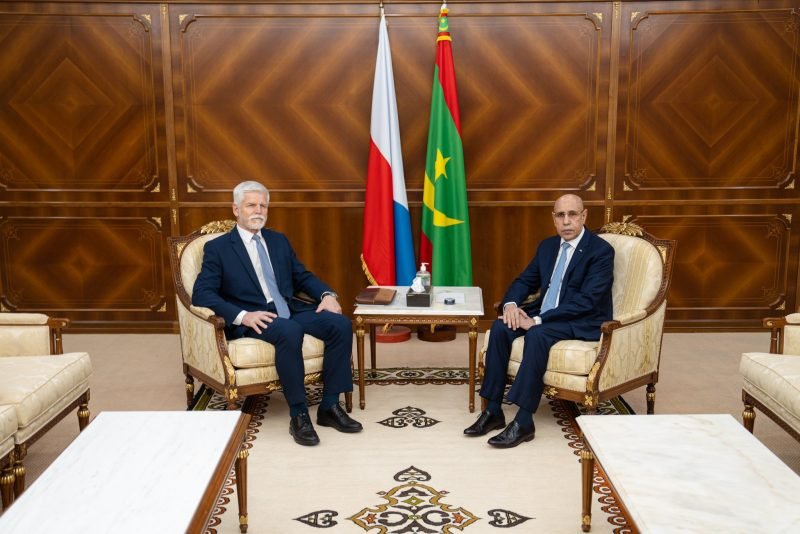
Last April, Czech President Petr Pavel took a four-day visit to Africa, beginning in Mauritania, where he became the first Czech or Czechoslovak head of state to visit the country. Czech President Petr Pavel stated during the visit that “Mauritania is our key African partner. I see the first-ever visit between our countries at the presidential level as a strong indication of the interest in developing cooperation. Indeed, Africa and Europe face complex and common challenges. Migration, terrorism, climate change and security threats are interlinked. Mauritania’s deepening cooperation with the Czech Republic, the European Union and NATO thus contributes to promoting stability not only on the African continent, but also in Europe as a whole.”
In 2024, the Czech Republic deployed over 20 instructors to Mauritania as part of a NATO military mission focused on training Mauritanian Special Forces. This mission, which is set to continue until 2026, reflects the practical foundation of the new defence pact and demonstrates the Czech commitment to strengthening Mauritania’s military capabilities. This MoU is the latest step in a broader trend of intensified diplomatic, economic, and military cooperation between the Czech Republic and Mauritania. The relationship reached a notable milestone in April 2025, when Czech President Pavel made a historic state visit to Mauritania—the first by a Czech president.
This visit emphasised Mauritania’s growing role in European and Western security interests, particularly in a part of the world where stability is increasingly vital. During the visit, the two presidents signed a treaty that expanded cooperation beyond military matters to include investment, technology transfer, training, and shared expertise. The treaty also addressed the exploitation of Mauritania’s natural resources, such as rare earths, raw minerals, and gas, positioning the Czech Republic as a strategic partner in Mauritania’s economic development.
Trade between the two countries remains modest and uneven. In 2024, Czech exports to Mauritania amounted to approximately $2.2 million, consisting mainly of machinery, electrical equipment, and iron and steel products. By comparison, Mauritanian exports to the Czech Republic were far smaller, totalling less than $100,000 and primarily made up of seafood, melons, and small amounts of raw goods. Despite this imbalance, the partnership offers clear benefits for Mauritania. It provides access to affordable, high-quality European industrial goods, offering an alternative to Chinese products and more competitive prices than those from Germany or France.
The agreement also supports Mauritania’s push toward faster industrialisation, with specific mentions of increased Czech access to the country’s valuable resources, including rare earth materials, ores, uranium, petroleum, and copper. For the Czech Republic, this pact strengthens its foothold in Western Africa and enhances its role as a contributor to regional security. For Mauritania, it means not only military support but also an economic partnership that could help unlock its potential as a resource-rich nation. Together, the defence pact and the broader treaty signed in April reflect a practical alignment of interests, with both countries leveraging their respective strengths.