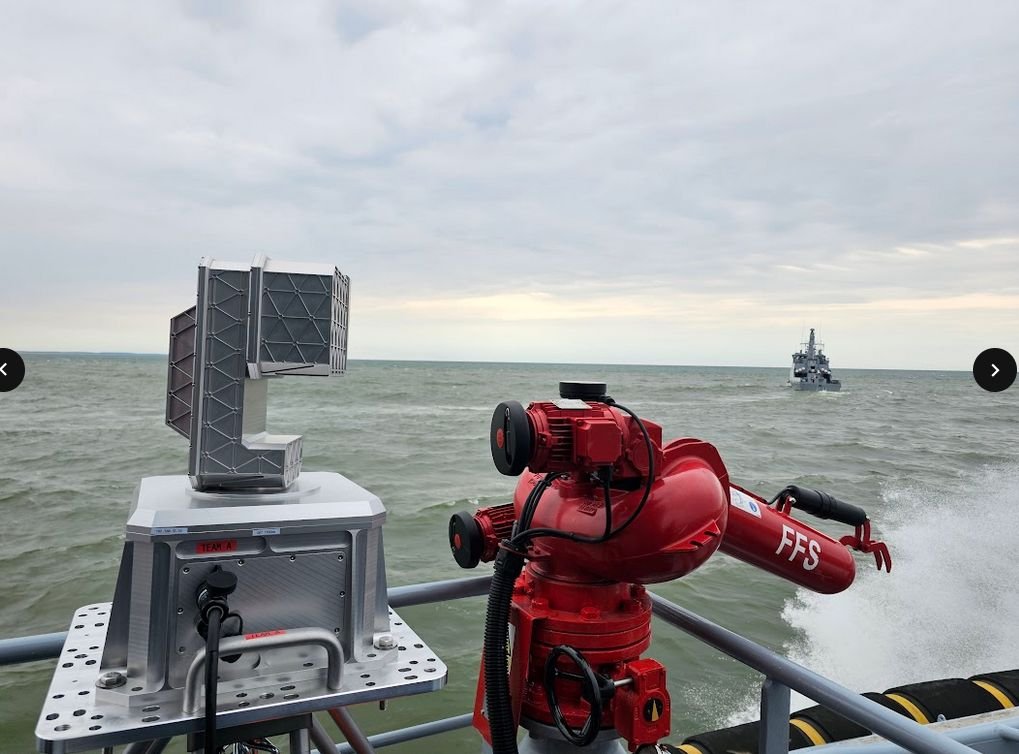

Lithuanian satellite telecommunications firm Astrolight has tested a laser communication system connecting a pair of naval vessels, demonstrating unhindered and secure transmission.
Compared to conventional radio-frequency-based communication, laser-based transmission is faster and harder to detect and decode.
During the test, the POLARIS laser communication terminal rapidly established a communication link between the vessels and kept it stable throughout the effort.
The test was held in the Baltic Sea, which is plagued by radio interference that affects maritime communication and geolocation accuracy.
“So proud of my team Astrolight making this a reality: jamming resistant & high speed laser communication for ships is now ready to replace 100 year old technology of signal lamps,” co-founder and CEO of Astrolight, Laurynas Mačiulis, posted on linkedin.
“This means NATO naval units will now be able to share tactical information without the risk of electronic warfare and detection at Gigabit per second speeds.”

Integration With Lithuanian Navy
Developed under a Lithuanian Ministry of National Defence program, the 16-kilogram (35 pound) system can support communication at a range of up to 50 kilometers (31 miles), with data transfer speed of up to one Gigabit (1,000 Megabits) per second.
The test’s success has accelerated the system’s further development.
For further tests and integration with the Lithuanian Navy, the prototype will be handed over to the service. It will also be tested in upcoming NATO exercises.
“This capability is especially valuable for naval operations — secure, high-bandwidth, and low-signature communication when it matters most,” Lithuanian Navy Lieutenant Commander Justinas Žukauskas explained.
“The prototype will now be handed over for continued testing and integration into the structures of the Lithuanian Armed Forces, strengthening our national defense and supporting NATO’s broader goals in resilient communications,” Žukauskas added.