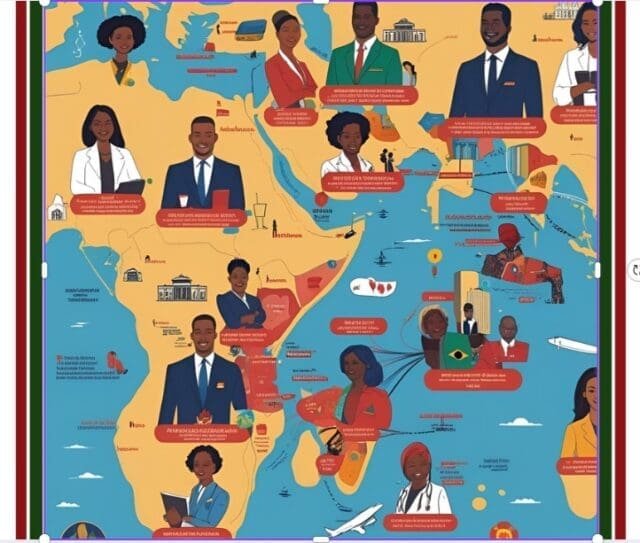

In a significant milestone for the Kenyan diaspora community, the population has surged to over 4 million, underscoring the resilience, adaptability, and ambition of Kenyans pursuing better opportunities abroad.
This growth is not only a testament to individual determination but also reflects the increasing impact of government-led foreign employment initiatives designed to expand access to global job markets.
– Advertisement –
According to the latest government statistics, the number of Kenyan children born abroad recorded a 15 percent increase compared to the number of foreign birth registrations in 2024.
This uptick reflects not only growing migration patterns but also the expanding footprint of Kenyan families across global communities.
The United States of America—home to the largest Kenyan diaspora population, estimated at approximately 159,000—leads in the number of registered births among Kenyans living abroad, followed closely by the United Kingdom with a population of 144,000 according to online statistics
What’s happening?
A Business Daily analysis states that “it is estimated over four million Kenyans live and work abroad,” spread across the US, UK, Canada, Australia, Gulf States, Europe, and more.
– Advertisement –
The Central Bank of Kenya reports diaspora remittances hit a record $4.19 billion in 2023 (up from $4.03 billion in 2022), with inflows reaching an all‑time high of $4.95 billion in 2024, over half coming from Kenyans in the US.
Role of the foreign‑jobs programme
The Ruto government has actively negotiated labor export deals with countries like Germany, Denmark, Canada, Gulf states, and more.
Since late 2023, over 200,000 workers have been placed abroad with an aim of sending 1 million per year for the next three years.
New State Department for Diaspora Affairs initiatives encourage remittances and diaspora investment.
Implications & context
Diaspora remittances now exceed revenue from traditional exports like tea, coffee, and horticulture.
This influx of foreign currency boosts Kenya’s foreign reserves, economic stability, and household incomes.
However, concerns remain about the “brain drain”, domestic skills shortages, and possible worker exploitation overseas