– Advertisement –
On the road to “net zero”, governments should use a separate target to control the ramp-up of atmospheric carbon removals, independently of emission reductions. Setting a political target for the volume of such planetary waste management is almost as cost-effective as letting the market decide, and it produces a more reliable and – in terms of planetary boundaries – sustainable result.
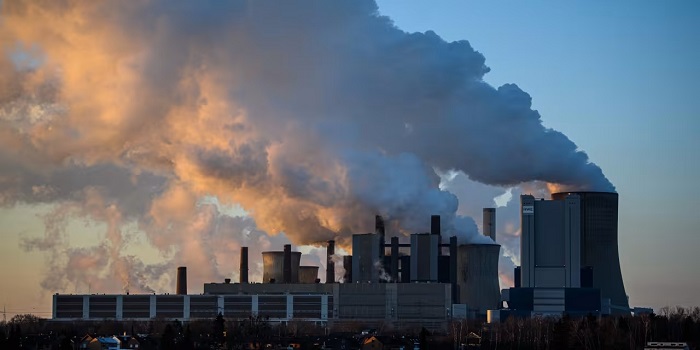
This is the conclusion of a comprehensive model study by the Potsdam Institute for Climate Impact Research (PIK), now published in the renowned journal Nature Communications.
For the first time, this work quantitatively examines how global heating can be limited to 1.5°C using separate targets for emissions and removals. PIK relies on its integrated assessment model REMIND, which describes the energy sector with a high degree of technological detail and shows how it interacts with climate and the economy.
“We wanted to know how much additional cost would be incurred by a separate political control,” explains Jessica Strefler, head of the PIK Carbon Management Team and a co-author of the study. “Letting the market decide how much to reduce emissions, and how much to compensate for remaining emissions through removals, is theoretically compelling, but in practice – at least in the short and medium term – it could show problematic weaknesses.”
In such a system, the uniform carbon pricing – where the price paid by emitters is the same as that collected by removal companies – automatically ensures the most favourable mix in terms of direct costs: in a market equilibrium, emissions are reduced exactly to the point where the next tonne of CO₂ can be removed more cheaply than being avoided.
But a high removal volume could harm the environment – for example, because “climate plantations” with fast-growing biomass consume a lot of land and water. In addition, a removal volume that forms in real time on the market affects investors’ planning security, which is particularly important in this emerging industry.
The shift appears financially viable
In several model runs, all of which assume compliance with the 1.5°C limit and net-zero carbon emissions in 2050, the study examines the consequences of achieving net zero with different levels of carbon removal. Based on the study’s assumptions, a uniform carbon price ensures a global annual removal volume that increases to around 7 billion tonnes by 2050.
The key finding, however, is that setting a volume target below this market equilibrium results in only a small increase in costs. Even well below equilibrium, the cost of the climate transition rises by less than 10 percent. The shift to a separate removal target therefore appears financially viable.
The results point to some fundamental recommendations: “Policymakers should set the removal target high enough to stimulate urgently needed investments in the relevant technologies and the ramp-up of removals,” emphasises Anne Merfort, a PhD student in PIK’s Transformation Pathways research department, and lead author of the study. “Nevertheless, policymakers should definitely avoid overemphasising the role of removals and thereby undermining decarbonisation.”
A stringent avoidance target also has many other advantages: “It means that less underground CO₂ storage is needed, less greenhouse gas is released into the atmosphere, and the state has higher carbon-price revenues and more scope for social compensation.”
The study also sheds light on the interactions within a system that has separate targets for emissions and removals. It shows how the level of the removal target influences the carbon price for greenhouse gas emissions, as well as the technology mix for removals.
“This study clarifies the levers that policymakers have at their disposal on the road to climate neutrality,” says PIK Director Ottmar Edenhofer, also a co-author. “We need market-based and well-designed removal targets at the EU level – not too high in view of sustainability, but also not too low in view of driving investments and technological progress. After all, planetary waste management will become a central pillar of climate protection after 2050.”