

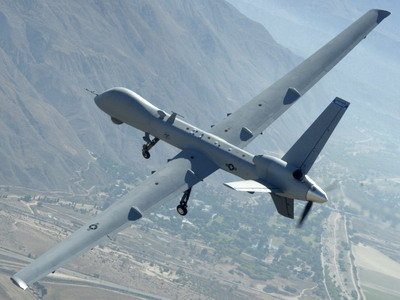

In its ongoing campaign to contain jihadist threats in the Horn of Africa, US Africa Command (Africom) announced the execution of a precision airstrike targeting ISIS-Somalia on Sunday, 1 June.
According to Africom, the airstrike was conducted “In coordination with the Federal Government of Somalia.” It took place approximately 72 kilometres south of Bossaso, a strategic port city and known stronghold of the Islamic State’s East African affiliate.
This latest strike brings the total number of US airstrikes in Somalia in 2025 to 21, underscoring a deliberate and methodical escalation of American counterterrorism operations in the region. The target, ISIS-Somalia, remains a persistent and evolving threat in the country, where it has maintained a resilient operational presence despite years of military pressure. Sources indicate that the strike was intended to disrupt the group’s capability to orchestrate attacks not only within Somalia but also against US personnel and broader international interests.
In its official statement, Africom reiterated its commitment to neutralising the threat posed by ISIS-Somalia. “Africom, alongside the Federal Government of Somalia and Somali Armed Forces, continues to take action to degrade ISIS-Somalia’s ability to plan and conduct attacks that threaten the US homeland, our forces, and our citizens abroad,” the statement read. The command did not disclose which specific platforms or units were used in the airstrike, citing operational security.
Africom has consistently emphasized its adherence to international law and the minimization of civilian harm. As with previous operations this year, the 1 June airstrike was assessed to have caused no civilian casualties. While verification of ground impact remains challenging in remote areas of Somalia, there has been no contradicting evidence thus far from independent monitors regarding these 2025 operations.
From a strategic and theoretical standpoint, the uptick in strikes aligns with a containment doctrine that aims to stifle the expansion of jihadist actors without direct large-scale US troop deployments. The Somalia operations exemplify the principle of cooperative security, whereby US airpower is leveraged in close coordination with local ground forces. This model allows for sustained pressure on violent extremist organizations while avoiding the political costs and logistical challenges associated with enduring boots-on-the-ground missions.
The increase in airstrikes also supports other broader security objectives. By reinforcing Somali sovereignty and aiding in its counterterrorism capabilities, the United States contributes to the stabilization of a strategically critical region. The Horn of Africa lies adjacent to vital maritime chokepoints such as the Bab el-Mandeb Strait and the Gulf of Aden—gateways for a significant portion of global oil and commercial shipping. Insurgent activity in Somalia, if left unchecked, threatens not only local populations but also international commerce and freedom of navigation.
The pattern of strikes also reveals a refined tactical logic. Of the 21 airstrikes recorded since second Trump presidency, a majority targeted ISIS-Somalia fighters, commanders, and logistical. These are in areas that have long been under pressure from both Al-Shabaab and government-affiliated forces, yet have remained fertile ground for the Islamic State’s local offshoot. By targeting specific leadership and infrastructure, Africom appears focused on precision operations that could disrupt operational continuity rather than engaging in indiscriminate kinetic campaigns.
Over the last four months, April saw the heaviest tempo of operations, accounting for one-third of 2025’s total strikes. These numbers reflect a steady acceleration, with each operation reportedly authorised in response to credible threat intelligence and conducted in coordination with Somali partners. Importantly, while both ISIS-Somalia and Al-Shabaab have been targeted, the majority of recent strikes were concentrated on ISIS-linked targets, indicating a possible strategic pivot or shift in threat prioritisation.
For regional security watchers, this campaign offers a lens into the United States’ evolving posture in Africa. While US ground troop numbers remain limited, the airstrike campaign underscores Washington’s commitment to combating extremist groups that exploit ungoverned spaces and local fragility. In Somalia’s case, where years of internal conflict, political fragmentation, and clan-based rivalries have undermined centralised authority, external actors like the US continue to play a critical stabilizing role.
Yet, while airpower may yield some tactical gains, in the long-term, a question for scholarly debate about military pressure eliminating ideologically driven non-state actors, may be an area academia may wish to explore.
Still, with no civilian casualties reported across 21 strikes and no major backlash from regional governments or international partners, the US campaign appears, for now, to be achieving its operational objectives. As the situation evolves, analysts will continue to monitor whether this measured application of force will translate into strategic success—or whether it will delay a broader reckoning with the deep-rooted instability that has challenged Somalia for decades.
Pearl Matibe is a Washington, DC-based geopolitical analyst and correspondent with expertise in foreign policy and international security, regularly covering the Pentagon and White House. Follow her on X (Twitter): @PearlMatibe.


