When Patrick Soon-Shiong, the billionaire businessman, medical researcher and owner of the Los Angeles Times, opened a $250mn vaccine facility in Cape Town in 2022, he was asked by Geordin Hill-Lewis, the city’s mayor, why he had chosen the Western Cape capital to make his investment.
After all, Soon-Shiong, a South African-born US citizen and entrepreneur, was brought up in Port Elizabeth, studied at the University of Witwatersrand in Johannesburg and built his business empire in California, Hill-Lewis explains.
“His instantaneous response was, ‘It’s the universities. I need a steady supply of young scientists and engineers and I can get them in Cape Town,’” Hill-Lewis adds, recounting his meeting with Soon-Shiong at the vaccine facility’s inauguration event attended by South Africa’s President Cyril Ramaphosa. “I thought that was a great remark.”
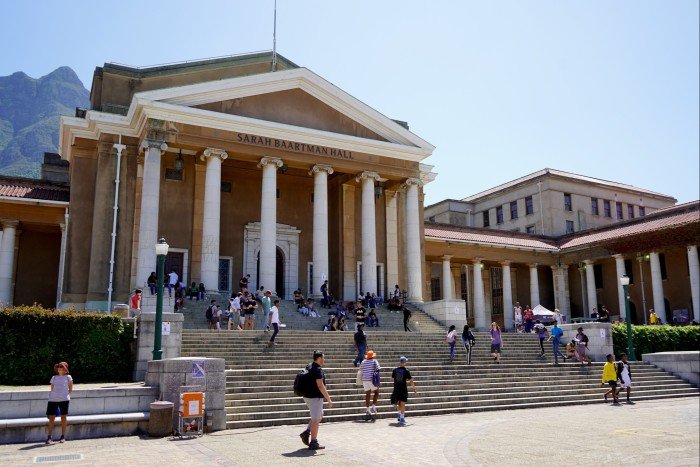
As well as the University of Cape Town, frequently ranked as the best on the continent, the city has other respected institutions of higher learning, including the Cape Peninsula University of Technology, the University of the Western Cape and, just up the road in the wine region, Stellenbosch University.
Like the Cambridge-Oxford cluster in the UK, or Boston in the US, Cape Town’s concentration of universities enables a steady stream of PhD and other research to be spun out into companies, making the city one of Africa’s foremost start-up hubs, investors say.
One example is H3D, an integrated drug-discovery centre founded by Kelly Chibale, a Zambian professor of organic chemistry at the University of Cape Town.
In 2017, H3D became the first research centre on the continent to put an “African drug” — an antimalarial — into phase II clinical trials. Last year, before the medical research funding environment was hit by cuts to the US Agency for International Development and the National Institutes of Health, it was employing 75 researchers, most of them with doctorates.
Cape Town has also benefited from a broader trend in South Africa, known as “semigration” in which wealthy people from Gauteng province, the industrial heartland, as well as poorer ones from Eastern Cape, flock to a city that is known for having better infrastructure and services than Johannesburg, the country’s economic capital.

While that brings problems, such as pushing up rents and house prices, it also adds to Cape Town’s cluster effect. Among those shifting are banks and other financial institutions, which have either moved their headquarters to Cape Town or have seen increasing numbers of staff relocate to the city.
“There’s been such a migration of the financial services industry in South Africa to Cape Town that there’s a growing ecosystem of venture capital finance available here, which I think supports the tech and start-up ecosystem,” Hill-Lewis says.
Mia von Koschitzky-Kimani, partner at Future Africa, which invests in early start-ups, recently moved from Nairobi to Cape Town in search of investment opportunities. Though it is early days, she says, her first impression of the city’s start-up scene is that it is very different from the ones in Kenya and Nigeria.
In South Africa, she says, many of the founders are white, with Black South Africans — for so long excluded from business opportunities by racist apartheid laws — preferring to work in the public sector or for established companies. Her hunch is that Black-owned start-ups struggle to access international capital, which does not necessarily target South Africa, a notionally richer country than most in Africa, meaning that some businesses may be undervalued.
Another difference is that, while Nigerian start-ups are most often created to solve problems of logistics, finance and daily living in Nigeria, many of the businesses in Cape Town are addressing an international market, Koschitzky-Kimani says. Some of the pitch decks she receives are technically very sophisticated, she adds, indicating a certain level of skill and an ambition to solve global problems.
“The quintessential South African entrepreneurs are building for South Africa or thinking about the world outside Africa,” she says. “They think that Mexico might be closer to South Africa than Lagos — and in some ways they might be right.”

Cape Town, with its relaxed lifestyle and proximity to mountains and sea, as well as world-class vineyards, has also benefited from the trend in digital nomads. South Africa’s government recently lowered the minimum earnings thresholds for the visa that allows applicants to base themselves in the country for up to three years, though many remote workers simply pitch up and enter the country as tourists.
“A lot of people are here for good, or for six months a year when the weather is good, but they have teams elsewhere in the world,” says Koschitzky-Kimani. “We don’t see that in Lagos, and only a little in Nairobi.”
Opus, a community of founders “from ideas to series A”, has also just set up in Cape Town, as well as in Johannesburg. Jono More, Opus’s South African lead, says the barriers to entry for start-ups have dropped massively, particularly because of advances in artificial intelligence, which means there are sometimes too many early-stage businesses chasing too few opportunities.
“There’s definitely a big entrepreneurial buzz in Cape Town,” he says. “But it’s incredibly hard to get funding. You can’t just knock on the door and get a meeting.”
More has met dozens of companies in both Cape Town and Johannesburg, ranging from fintechs to one turning black soldier flies into pet food. “It’s a very diverse group,” he says, pushing back on the idea that founders are mostly white. “There are from all walks of life, all colours, ethnicities, religions, and genders,” he says. “They call us the Rainbow Nation. I’m witnessing that at first hand.”