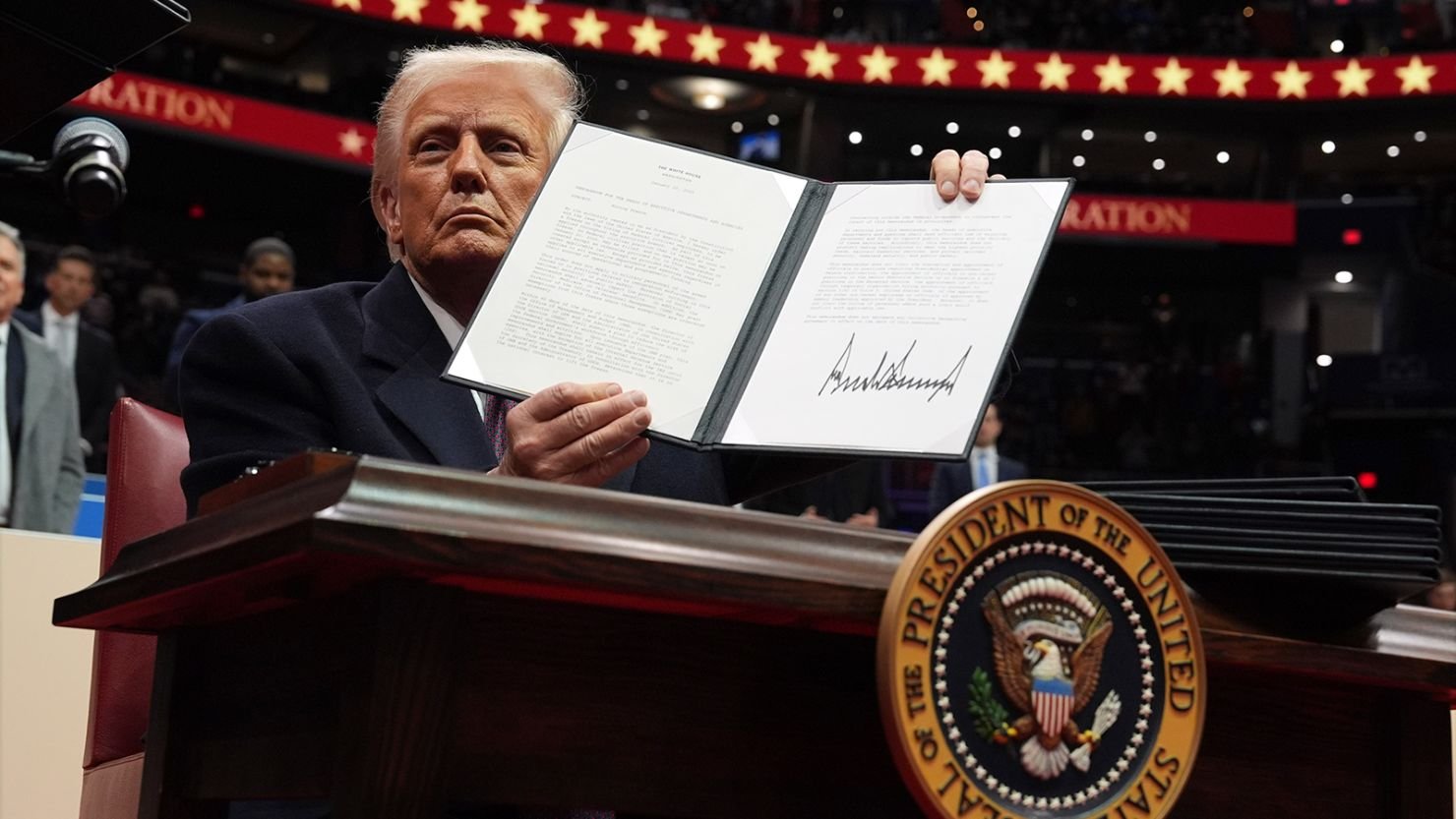
Donald Trump has been in the White House for over 3 months as the elected president of the United States.
The president, who marked his first 100 days in office few days ago, rolled out multiple achievements or “wins” for his country.
Seen as a nationalistic leader, Trump’s presidency may have been good for his country, but the rest of the world seems to be catching the heat from his foreign policies.
For Africa’s electricity sector, for instance, the experience of the new White House leader has been a bittersweet one.
Following his resumption as president, Trump immediately took the drastic decision on ending the Power Africa initiative, reducing climate funding, imposing tariffs on renewable energy raw materials, and cutting international spending.
With over 600 million Africans lacking reliable electricity access, the continent relies heavily on international support to bridge its energy gap.
While these policies have disrupted established funding mechanisms, they have also prompted African institutions to seek alternative financing models.
Mixed implications of the termination of Power Africa
Within Trump’s 100 days in office, the Power Africa initiative, launched in 2013 by USAID, was terminated after over a decade of work.
The initiative initially supported over 150 projects, added 15,498 megawatts of power, and connected 216 million people to electricity.
The termination was based on cost-cutting under the Department of Government Efficiency, led by Elon Musk.
The termination has mixed implications. On one hand, it halts critical support for off-grid and mini-grid solutions, leaving projects like Nigeria’s rural electrification initiatives in limbo.
On the other hand, it encourages African governments and private sectors to seek local and regional partnerships, potentially fostering self-reliance.
The absence of Power Africa’s $1.2 billion investment, which reduced 45 million tons of carbon emissions, challenges renewable energy progress but opens opportunities for African-led initiatives to fill the gap.
Reduction for climate funding
Trump’s scaled-back international climate financing. This could impact Africa’s renewable energy goals.
In March 2025, the administration withdrew U.S. funding from the Just Energy Transition Partnerships (JETP). This exit strongly affected South Africa and Indonesia, which were among the beneficiaries of the program.
Additionally, the U.S. rescinded $4 billion in pledges to the UN’s Green Climate Fund, the world’s largest climate fund.
“The government of the United States rescinds any outstanding pledges to the Green Climate Fund,” U.S. Secretary of State Marco Rubio said.
Meanwhile, these funds were vital for supporting renewable projects like solar farms and wind turbines across Africa.
This reduced funding would increase the financial burden on African nations, potentially hindering their ability to meet their Nationally Determined Contribution (NDC) targets and delaying the transition to cleaner energy sources.
However, the cuts could incentivise African institutions like the Africa Renewable Energy Initiative (AREI) to mobilize domestic resources and attract private investment, reducing reliance on foreign aid.
How Trump’s 10% tariff is changing the renewable energy market
In addition, Trump’s trade policies of a 10% tariff on foreign-made goods affect Africa’s renewable energy supply chain.
Many African nations import raw materials and components for solar panels, wind turbines, and battery storage systems.
These tariffs, combined with global interest rate hikes, complicate Africa’s ability to finance large-scale energy projects, pushing developers to seek costlier local or alternative international suppliers.
The focus on protecting U.S. industries has led to tariffs on critical renewable energy materials, such as silicon for solar panels and lithium for batteries..
The impact of international spending cuts
Trump’s “America First” policy has slashed international spending, with a 90-day freeze on foreign aid announced in January 2025.
The freeze halted funding for energy, health, and humanitarian programs, leaving millions vulnerable.
This may strain African budgets, diverting funds from other sectors.
Conversely, the cuts could accelerate partnerships with non-U.S. donors, such as the European Union or China, and spur private sector involvement.
What lies ahead for Africa’s energy financing
In the past 100 days or more, Trump’s policies have created a complex structure for Africa’s electricity financing.
These policies threaten initiatives like Mission 300, which aims to connect 250 million Africans to electricity by 2030.
However, Intercontinental institutions like the African Development Bank (AfDB), World Bank, and Africa50 would have to step up.
The AfDB, which committed $3 billion to Power Africa in 2013 and was seen as the anchor partner for Power Africa on the continent, can decide to take the lead.
These institutions can also leverage public-private partnerships to attract investment, as demonstrated by the AfDB’s $1.4 billion energy investments in Power Africa countries over five years.
The Sustainable Energy Fund for Africa (SEFA), which supports small and medium-scale renewable projects, can partner with Africa50 to finance 1,000 km of transmission.
In February 2025, Africa50 sets up the first region-wide investment vehicle dedicated to off-grid power companies and plans a $500 million fund to invest in and improve climate-friendly projects.
The shareholders for this investment included the African Development Bank and Morocco’s Central Bank.