

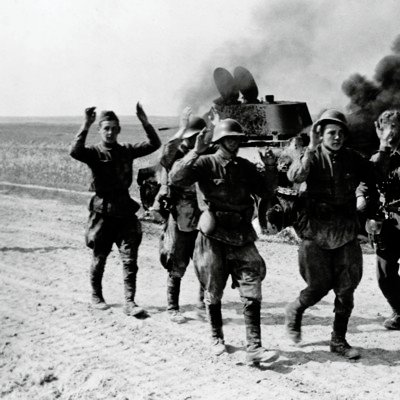
History is replete with cautionary tales about the dangers of ideological purges, particularly when they target national-security institutions. One of the starkest examples comes from the Soviet Union, when Joseph Stalin’s purges gutted the Red Army on the eve of World War II. Now the United States faces a potentially parallel crisis: the purge of transgender service members from the military amid rising tensions with China and Russia. The consequences for national security ripple far beyond the careers of a few thousand troops.
In 1937 and 1938, the Great Terror swept through the Soviet military. More than 24,000 officers were discharged, and nearly 10,000 were arrested. Stalin targeted officers based on their belonging to perceived “dangerous” groups, rather than any actual disloyalty. The loss of senior leaders cost the Red Army thousands of cumulative years of institutional experience, forcing Stalin to replace seasoned generals with untested officers promoted for their political reliability rather than their military competence. Historian David Glantz writes that Stalin’s paranoia “impelled him to stifle original thought within the military institutions and inexorably bend the armed forces to his will…The bloodletting that ensued tore the brain from the Red Army, smashed its morale, stifled any spark of original thought and left a magnificent hollow military establishment, riper for catastrophic defeat.”


This hollowing-out of leadership eroded deterrence. At the Nuremberg Trials after the war, German Field Marshal Wilhelm Keitel testified that many generals warned Hitler not to attack the Soviets, arguing the Red Army was still a formidable force. But Hitler dismissed these concerns, saying: “The first-class high-ranking officers were wiped out by Stalin in 1937, and the new generation cannot yet provide the brains they need.”
And so, in 1941, Germany launched its invasion. Despite the Red Army’s superior numbers and firepower, its lack of effective leaders turned what could have been a formidable defense into a series of catastrophic defeats. Understaffing in key command positions, coupled with a culture of fear that stifled initiative, resulted in avoidable tactical blunders. Often paralyzed in their response to the German invasion, Soviet troops were unwilling or unable to make independent battlefield decisions. This culture of paranoia and obedience, along with plunging morale, cost the Soviet Union millions of lives and nearly the war.
A dangerous parallel
Though the scale of the Great Terror dwarfs the trans ban, the United States is at risk of repeating Stalin’s blunder. Thousands of transgender troops, most with more than a decade in uniform, currently serve in the U.S. armed forces. Like Stalin’s Red Army officers, they are being expelled not for any performance failures, but solely because of ideology.
The current administration claims, without evidence, that transgender people are “incompatible with the high mental and physical standards necessary for military service.” Officials have been unable to back up these claims, even when challenged in court. “Any evidence that such service over the past four years harmed any of the military’s inarguably critical aims would be front and center. But there is none,” wrote Judge Benjamin Settle, one of three U.S. District Court judges who have placed injunctions on the administration’s ban.
Another is Judge Ana Reyes, who declared, “Plaintiff’s service records alone are Exhibit A for the proposition that transgender persons can have the warrior ethos, physical and mental health, selflessness, honor, integrity, and discipline to ensure military excellence. Defendants agree…Plaintiffs, they acknowledge, have ‘made America safer.’ So why discharge them and other decorated soldiers? Crickets from Defendants on this key question.” Despite the decisions, the government is determined to press forward; it has appealed each case and, on Thursday, asked the Supreme Court to clear the way for its ban.
The removal of so many dedicated, skilled, and battle-tested personnel can only reduce readiness. Many transgender troops are senior officers and non-commissioned officers who are leading from the front or training and developing the next generation of service members. Take Ken Ochoa, a warrant officer and all-source intelligence technician who served as one of the first transgender drill sergeants, then as an instructor for the intelligence analyst Advanced Leaders Course. Ken, who has previously deployed to Afghanistan, returned just this month from a deployment supporting Operation Inherent Resolve.
Or Lt. Cmdr. Kris Moore, who enlisted in 2005 and gained an appointment to the Naval Academy in the class of 2014. Kris is a surface warfare officer with multiple deployments who holds a master’s degree in education and leadership. He recently returned from an operational deployment, which followed his assignment to instruct cadets at the Academy.
Master Sergeant Jayce Saldivar, one of the first cyber operators selected for transfer to the Space Force, is the first senior enlisted leader at the Space Force’s officer Joint Professional Military Education program at Johns Hopkins University. Jayce helps develop the future senior leaders of the service into consummate professionals who can direct space warfare and lead their people to new heights.
The loss of such trained personnel means their replacements will be less experienced, just as Stalin was forced to promote unqualified officers to fill gaps. Military readiness is not just about numbers—it is about experience, training, and trust. Replacing seasoned professionals with less-prepared individuals weakens operational effectiveness.
Beyond the loss of talent, the purge undermines morale across the armed forces. Those who saw transgender troops as friends and teammates now see holes in their unit manning. As well, forcing out qualified transgender personnel sends the message that even dedicated professionals can be dismissed for reasons completely unrelated to their capability—hardly encouragement to pursue a long-term military career.
And with nearly 30 percent of Gen Z adults aged 18-25 identifying as members of the LGBTQ+ community, we have to wonder where new recruits will come from.
Both the Soviet and U.S. cases illustrate how ideology can override strategic logic, leading to weakened armed forces at moments of great geopolitical tension. Indeed, the timing of this policy shift could hardly be worse. As the U.S. faces an increasingly aggressive China in the Pacific and continued Russian expansionism in Ukraine, with increasingly high-technology threats such as drones, hypersonic missiles, and “dogfighting” satellites, the military needs every capable service member it can retain. And just as Hitler saw an opportunity in Stalin’s weakened Red Army, America’s adversaries may view this internal instability as a sign of vulnerability.
Transgender service members have proven their worth time and again. Removing them from the military is not only an attack on them, but a direct threat to national security. In a time of growing global instability, the U.S. military cannot afford to weaken itself by sidelining dedicated professionals, stifling diversity of thought and a willingness to provide best military advice over “yes, sir”, and reducing the pool of Americans willing and able to serve. It is essential that our national defense remain guided by strategic necessity, not ideology.
The views presented in this piece are personal and do not necessarily reflect the views of the Defense Department or the United States government.
Bree Fram is a colonel and astronautical engineer in the U.S. Space Force. She is stationed at the Pentagon and is one of the highest-ranking transgender service members in the military.


