
• Business
  • Markets
  • Politics
  • Crypto
  • Finance
  • Intelligence
    • Policy Intelligence
    • Security Intelligence
    • Economic Intelligence
    • Fashion Intelligence
  • Energy
  • Technology
  • Taxes
  • Creator Economy
  • Wealth Management
  • LBNN Blueprints
  • Business
  • Markets
  • Politics
  • Crypto
  • Finance
  • Intelligence
    • Policy Intelligence
    • Security Intelligence
    • Economic Intelligence
    • Fashion Intelligence
  • Energy
  • Technology
  • Taxes
  • Creator Economy
  • Wealth Management
  • LBNN Blueprints

How Google DeepMind CEO Went From Chess to AI, Nobel Prize

Simon Osuji by Simon Osuji
March 26, 2025
in Creator Economy
0
How Google DeepMind CEO Went From Chess to AI, Nobel Prize
0
SHARES
2
VIEWS
Share on FacebookShare on Twitter

Google DeepMind CEO Demis Hassabis’s AI journey had an unexpected start: his early mastery of chess.

Years before Hassabis would receive the 2024 Nobel Prize in Chemistry for creating an AI program that predicted protein structures, he was a child chess champion who started playing the game at the age of four. By age 13, he was a chess master competing against adults in international competitions.

In a lecture earlier this month at the University of Cambridge, Hassabis, now 48, explained that chess got him “thinking about thinking itself” or exploring the mental processes behind complex thoughts.

“How does our mind come up with these plans, these ideas?” Hassabis asked. “Perhaps more fascinating to me than the games I was playing was the actual mental process behind it.”

Related: Google Is Paying $2.7 Billion to Reportedly Rehire an Early Employee Who Built an AI Chatbot Before ChatGPT

Hassabis’ first exposure to programming as a child was through an electronic chess computer, a physical board capable of playing chess against a human player. Though Hassabis was meant to test out different chess strategies on the computer, he was more interested in how the computer worked and how someone had programmed it to play chess.

“I remember being fascinated by the fact that someone had programmed this lump of inanimate plastic to play chess really well against you,” Hassabis said. “I was really fascinated by how that was done and how someone could program something like that.”

In his early teens, Hassabis began trying to build AI programs himself on an early home computer, the Amiga 500. From then on, he “was hooked” on AI and decided to spend his entire career making advances in the field.

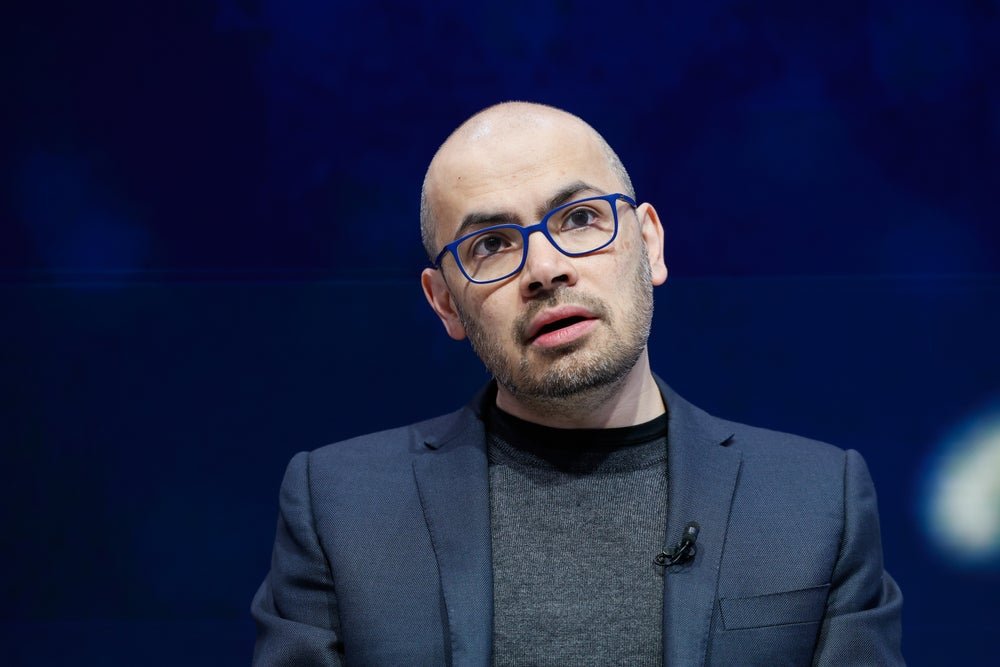
Demis Hassabis. Photographer: Stefan Wermuth/Bloomberg via Getty Images

Hassabis co-founded AI company DeepMind in 2010, and it was acquired by Google in 2014 for more than $500 million. He later invented AlphaZero in 2017, an AI algorithm that needed only the rules of chess and four hours of playing against itself to become the strongest chess player ever, beating human chess masters.

Hassabis was awarded the Nobel Prize in Chemistry in 2024 with fellow laureate and DeepMind director John Jumper for creating an AI model, AlphaFold2, that accurately predicted the complex structures of almost all 200 million proteins, each within minutes. The AlphaFold Protein Structure Database, which makes these protein structures freely available, has reached over two million users in 190 countries, helping pave the way for advanced research in areas like Parkinson’s treatments and antibiotic resistance.

Related: Google Co-Founder Sergey Brin Is Back at the Company ‘Pretty Much Every Day.’ Here’s What He’s Working On.

Hassabis pointed out in his Cambridge lecture that it takes an average of 10 years, plus billions of dollars, to create a new drug. According to the London School of Economics and Political Science, the average cost of developing a drug ranges from $314 million to $2.8 billion.

In the lecture, Hassabis touched on the possibility of developing drugs more quickly and cheaply using AI, “from potentially years down to minutes and seconds.”

Hassabis told DeepMind employees in London earlier this month that he thinks artificial intelligence will become more intelligent than human beings within the next decade.


Source link

Related posts

Spotify ventures into physical book sales, adds new audiobook features

Spotify ventures into physical book sales, adds new audiobook features

February 5, 2026
Meet Gizmo: A TikTok for interactive, vibe-coded mini apps

Meet Gizmo: A TikTok for interactive, vibe-coded mini apps

February 4, 2026
Previous Post

Group launches ‘10 Million African Girls’ campaign to empower a generation – EnviroNews

Next Post

‘Super-Turing AI’ uses less energy by mimicking the human brain

Next Post
‘Super-Turing AI’ uses less energy by mimicking the human brain

'Super-Turing AI' uses less energy by mimicking the human brain

Leave a Reply Cancel reply

Your email address will not be published. Required fields are marked *

RECOMMENDED NEWS

Can you Hedge on Webull?

Can you Hedge on Webull?

1 year ago
Hacked Documents Show Russia Recruits Cuban Mercenaries for Ukraine War

Hacked Documents Show Russia Recruits Cuban Mercenaries for Ukraine War

2 years ago
Tunisia’s Famous Bardo National Museum Reopens, Showcasing Rich Heritage

Tunisia’s Famous Bardo National Museum Reopens, Showcasing Rich Heritage

2 years ago
Navy Capabilities to be Enhanced to Improve Service Delivery, President Ruto

Navy Capabilities to be Enhanced to Improve Service Delivery, President Ruto

1 year ago

POPULAR NEWS

  • Ghana to build three oil refineries, five petrochemical plants in energy sector overhaul

    Ghana to build three oil refineries, five petrochemical plants in energy sector overhaul

    0 shares
    Share 0 Tweet 0
  • The world’s top 10 most valuable car brands in 2025

    0 shares
    Share 0 Tweet 0
  • Top 10 African countries with the highest GDP per capita in 2025

    0 shares
    Share 0 Tweet 0
  • Global ranking of Top 5 smartphone brands in Q3, 2024

    0 shares
    Share 0 Tweet 0
  • When Will SHIB Reach $1? Here’s What ChatGPT Says

    0 shares
    Share 0 Tweet 0

Get strategic intelligence you won’t find anywhere else. Subscribe to the Limitless Beliefs Newsletter for monthly insights on overlooked business opportunities across Africa.

Subscription Form

© 2026 LBNN – All rights reserved.

Privacy Policy | About Us | Contact

Tiktok Youtube Telegram Instagram Linkedin X-twitter
No Result
View All Result
  • Home
  • Business
  • Politics
  • Markets
  • Crypto
  • Economics
    • Manufacturing
    • Real Estate
    • Infrastructure
  • Finance
  • Energy
  • Creator Economy
  • Wealth Management
  • Taxes
  • Telecoms
  • Military & Defense
  • Careers
  • Technology
  • Artificial Intelligence
  • Investigative journalism
  • Art & Culture
  • LBNN Blueprints
  • Quizzes
    • Enneagram quiz
  • Fashion Intelligence

© 2023 LBNN - All rights reserved.