

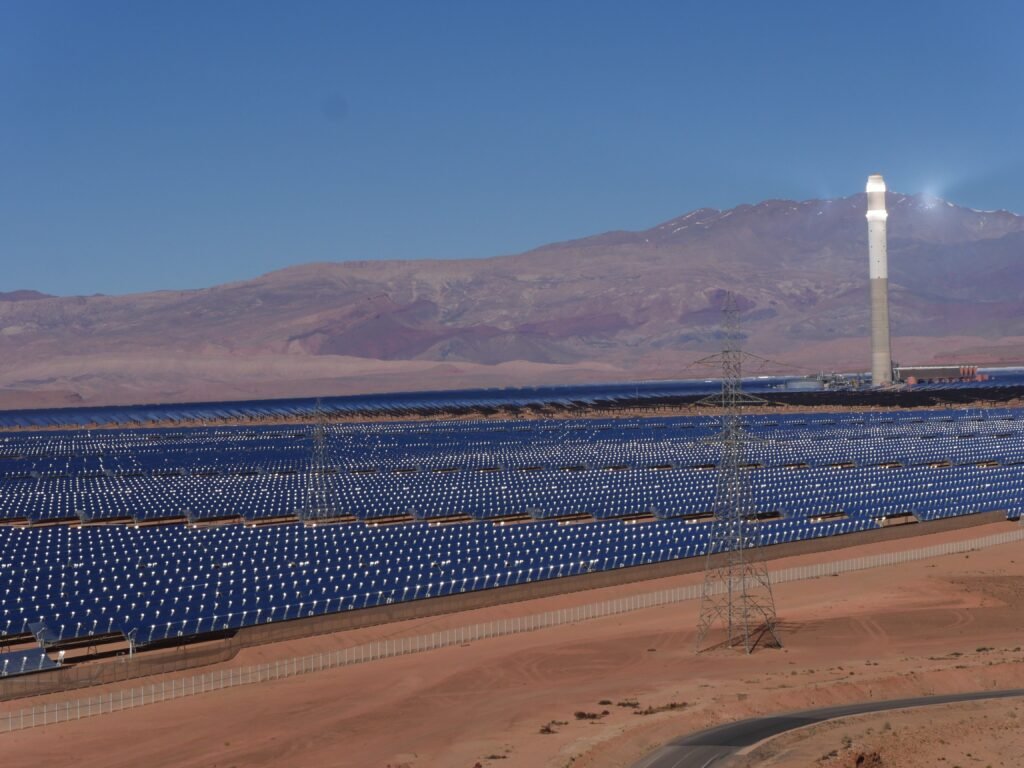
- Mission 300 will invest in new and rehabilitation of generation capacity, transmission systems, including intra- and regional interconnections, as well as distribution grids to build robust and reliable power systems.
- It will be complemented by reforms in the energy sector to ensure affordability and sustainability of electricity service, and financially viable utilities.
Across Africa, nearly 600 million people live in energy poverty, deprived of reliable access to electricity—a fundamental prerequisite for modern life. This staggering statistic represents more than just a lack of power. Significantly, it translates to limited opportunities for education, healthcare, gender equality, and economic growth.
Mission 300, a bold initiative championed by the African Development Bank Group and the World Bank Group in collaboration with key partners, seeks to change this narrative by providing first time electricity access to 300 million Africans by 2030. A key milestone in this effort, branded Mission 300, is the Africa Energy Summit scheduled for Dar es Salaam, 27/28 January 2025.
The Significance of Energy Access
Energy is the engine of development. Without affordable, reliable, and sustainable electricity, Africa cannot achieve its developmental aspirations or secure its rightful place in the global economy. Energy access is the cornerstone of economic transformation, opening doors to education, healthcare, and income generation.
Moreover, it fosters gender equality by reducing the time women spend on labour and time-intensive tasks such as cooking with traditional fuels or collecting for firewood. Mission 300’s success is therefore not just about electrification; it is about saving and empowering lives as well as communities. It is also about reducing greenhouse gas emissions and safeguarding biodiversity.
Yet, the path ahead is daunting. At the current pace of electrification, coupled with Africa’s rapid population growth, the number of people living without access to electricity could remain largely unchanged. Action is therefore an imperative, and Mission 300 provides the roadmap to achieve universal energy access by 2030, consistent with the United Nations’ Sustainable Development Goal 7 and the African Union’s Agenda 2063.
The Role of Mission 300
Mission 300 will invest in new and rehabilitation of generation capacity, transmission systems, including intra- and regional interconnections, as well as distribution grids to build robust and reliable power systems. It will be complemented by reforms in the energy sector to ensure affordability and sustainability of electricity service, and financially viable utilities while partnerships with the private sector will assist in mobilizing funding at the required speed and scale.
In addition to providing electricity access from interconnected power systems, through Mission 300’s transformative vision, mini-grids, and stand-alone solar home systems will be prioritized to provide electricity to underserved regions and communities, including in fragile and remote areas where extending the interconnected grid is impracticable.
These Distributed Renewable Energy (DRE) solutions are amenable to easy and speedy roll-out, cost-effective, modular, sustainable, and can ensure that no community is left behind in the Mission 300 journey. DRE solutions are projected to account for more that 50% of new connections by 2030.
A Defining Moment: The Africa Energy Summit
The upcoming Africa Energy Summit in Dar es Salaam will be a pivotal moment in Mission 300 journey. Hosted by the Government of the United Republic of Tanzania, the African Union, the African Development Bank Group, the World Bank Group, as well as the African Union, the summit will bring together over 25 Heads of State and Governments, Heads of international Organisation, including Banks, energy experts, and private sector leaders to forge a common path toward universal energy access.
The principal outcomes of the summit comprise of the adoption of the Dar es Salaam Energy Declaration by the entire continent and twelve country energy compacts co-created between countries and the Mission 300 partners.
The Dar es Salaam Energy Declaration will outline commitments to reforms and actions necessary to achieve Mission 300 while twelve country energy compacts, will expound on the principles of the Dar es Salaam Energy Declaration to establish tangible country specific actions and measures for accelerated electricity access such as least-cost power expansion plans, providing last-mile access through grid and distributed renewables, building financially viable energy systems, regional interconnection and promotion of private sector participation in the energy sector. The twelve countries that will submit energy compacts account for almost half of the global population without access to electricity.
Another important outcome will be the enlisting of additional partners to the Mission 300 bus. Several partners are expected to announce additional financial resources and technical assistance in furtherance of the Mission 300 goal.
Read also: Can Mission 300 finally brighten Africa’s energy horizon?
Why Now?
Firstly, is the unity of purpose and visionary leadership of African Development Bank Group and the World Bank Group Presidents that has led to the forging of a structured approach to definitively address the electricity deficit problem in Africa, in collaboration with other development partners.
Secondly, the continent is blessed with abundant energy resources, including renewable energy, such as 60% of the world’s best solar potential, of which only a tiny proportion has been harnessed.
Thirdly the cost of renewable energy technology, particularly wind and solar, has reduced dramatically in the recent past making electricity generation from these sources cost competitive compared to sources of conventional power. Moreover, access to information communication technology, and digitization thereof, currently enables payment platforms that support distributed renewable energy solution.
When combined, the foregoing provides unprecedented opportunities for addressing the continent’s energy access deficit while also espousing a low-carbon growth trajectory, to support Africa’s climate goals.
A Call to Action
Mission 300 is more than an energy initiative; it is a moral imperative. It represents a collective commitment to uplift millions from poverty, foster inclusive economic growth, and create a resilient, green future. But its success hinges on robust support from all stakeholders—governments, development partners, the private sector, and civil society. Together, we must prioritize reforms, mobilize investments, and leverage partnerships to transform Africa’s energy landscape.
Let us seize this defining moment. The Africa Energy Summit must not just a platform for discussion on energy. It must constitute a watershed moment for energy access in Africa. Let us therefore work to actualize Mission 300 and literally light up the lives of millions, thereby creating lasting change that will evoke enormous pride on future generations.
In conclusion, “the road ahead may be challenging, but it is also filled with opportunity. With determination, innovation, and collaboration, we can achieve universal energy access in Africa. This is our moment to make history.”
Op-Ed by Kevin Kariuki Vice President for Power, Energy, Climate, and Green Growth at the African Development Bank Group


