
• Business
  • Markets
  • Politics
  • Crypto
  • Finance
  • Intelligence
    • Policy Intelligence
    • Security Intelligence
    • Economic Intelligence
    • Fashion Intelligence
  • Energy
  • Technology
  • Taxes
  • Creator Economy
  • Wealth Management
  • LBNN Blueprints
  • Business
  • Markets
  • Politics
  • Crypto
  • Finance
  • Intelligence
    • Policy Intelligence
    • Security Intelligence
    • Economic Intelligence
    • Fashion Intelligence
  • Energy
  • Technology
  • Taxes
  • Creator Economy
  • Wealth Management
  • LBNN Blueprints

Top 7 African countries with most skin bleaching population

Simon Osuji by Simon Osuji
January 23, 2025
in Business
0
Top 7 African countries with most skin bleaching population
0
SHARES
2
VIEWS
Share on FacebookShare on Twitter

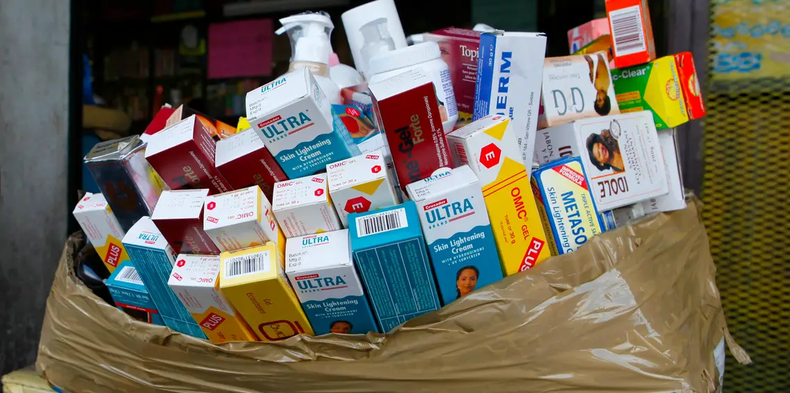
The practice of skin bleaching has been tied to various health issues, ranging from skin conditions to life-threatening diseases like diabetes, hypertension, and kidney disease.

The chemicals used in skin lighteners, particularly mercury, pose significant health risks. Mercury works by blocking melanin production and removing the top layers of skin through acid production.

Despite being banned or heavily restricted in many countries, skin bleaching remains a public health issue in Africa. Many Africans, especially women, continue to use these products despite knowing the risks.


Related posts

US troops arrive in northeast Nigeria as counterterror push intensifies

US troops arrive in northeast Nigeria as counterterror push intensifies

February 22, 2026
Strong rand puts damper on bigger citrus crop

Strong rand puts damper on bigger citrus crop

February 22, 2026

Stakeholders raise concerns

The proliferation of skin-lightening products has sparked widespread condemnation across Africa.

Nigeria’s Minister of State for Health and Social Welfare, Iziaq Salako, recently expressed concerns about the growing use of these products in Nigeria and Africa, despite their well-documented harmful effects.

Stakeholders have emphasized that many of these products contain toxic substances which can cause skin damage, organ toxicity, and even cancer

At a regional workshop in Gabon, Mr. Salako noted that Nigeria has one of the highest rates of bleaching product usage globally.

He emphasized that many of these products contain toxic substances, including mercury, hydroquinone, steroids, and heavy metals like arsenic, lead, and cadmium, which can cause skin damage, organ toxicity, and even cancer.

The Ministry of Health’s Cosmetics Safety Management Programme (CSMP) conducted a survey on skin-lightening agent usage, revealing that 52% of manufacturers use these agents in their products.

Prevalence of skin bleaching in Africa

According to a World Bank document, a recent meta-analysis found that 27.1% of Africans practice skin bleaching.

An analysis of 68 studies revealed that individuals aged 30 and under, had the highest skin bleaching prevalence at 55.9%, followed by those aged 31-49 at 25.9%.

Surveyed users cited the following reasons for using bleaching cream: 49.38% of women desired smooth and healthy skin, 30.86% sought to enhance their beauty, and approximately 20% aimed to gain social benefits, such as improved marriage prospects and better job opportunities.

The table below highlights African countries with the highest prevalence of skin bleaching;

Rank Country Bleaching Prevalence (%)

1

Nigeria

77%

2

Congo-Brazzaville

66%

3

Senegal

50%

4

Ghana

39%

5

South Africa

32%

6

Zimbabwe

31.15%

7

Mali

25%

Skin bleaching prevalence varies widely across Africa, with rates ranging from 25% in Mali to a staggering 77% in Nigeria.

Other countries report intermediate rates: 32% in South Africa, 39% in Ghana, 50% in Senegal, and 66% in Congo-Brazzaville.

Additionally, in Zimbabwe, 31.15% of women engage in skin bleaching.

These statistics highlight the pervasive use of skin-lightening products across the continent, indicating significant regional variations in skin-bleaching practices.

To address the growing issue of skin bleaching, WHO has partnered with countries to implement and enforce bans on harmful skin-lightening products, particularly those containing mercury and hydroquinone.

These collaborations aim to protect public health by phasing out toxic ingredients linked to severe health risks while promoting safer alternatives.

Source link

Previous Post

Fibre access in South Africa’s townships gets investment boost

Next Post

Climate change: 90 Parties submit first Biennial Transparency Reports – EnviroNews

Next Post
Climate change: 90 Parties submit first Biennial Transparency Reports – EnviroNews

Climate change: 90 Parties submit first Biennial Transparency Reports - EnviroNews

Leave a Reply Cancel reply

Your email address will not be published. Required fields are marked *

RECOMMENDED NEWS

Offshore wind decom must avoid ‘reputational damage’

Offshore wind decom must avoid ‘reputational damage’

1 year ago
Former IDF intel chief lays out four scenarios for the Middle East

Former IDF intel chief lays out four scenarios for the Middle East

8 months ago
Ethiopia secures $400 million UK investment to expand power grid linked to GERD dam

Ethiopia secures $400 million UK investment to expand power grid linked to GERD dam

3 weeks ago
Invest Qatar and Boeing sign MoU to drive aerospace industry growth

Invest Qatar and Boeing sign MoU to drive aerospace industry growth

2 years ago

POPULAR NEWS

  • Ghana to build three oil refineries, five petrochemical plants in energy sector overhaul

    Ghana to build three oil refineries, five petrochemical plants in energy sector overhaul

    0 shares
    Share 0 Tweet 0
  • The world’s top 10 most valuable car brands in 2025

    0 shares
    Share 0 Tweet 0
  • Top 10 African countries with the highest GDP per capita in 2025

    0 shares
    Share 0 Tweet 0
  • Global ranking of Top 5 smartphone brands in Q3, 2024

    0 shares
    Share 0 Tweet 0
  • When Will SHIB Reach $1? Here’s What ChatGPT Says

    0 shares
    Share 0 Tweet 0

Get strategic intelligence you won’t find anywhere else. Subscribe to the Limitless Beliefs Newsletter for monthly insights on overlooked business opportunities across Africa.

Subscription Form

© 2026 LBNN – All rights reserved.

Privacy Policy | About Us | Contact

Tiktok Youtube Telegram Instagram Linkedin X-twitter
No Result
View All Result
  • Home
  • Business
  • Politics
  • Markets
  • Crypto
  • Economics
    • Manufacturing
    • Real Estate
    • Infrastructure
  • Finance
  • Energy
  • Creator Economy
  • Wealth Management
  • Taxes
  • Telecoms
  • Military & Defense
  • Careers
  • Technology
  • Artificial Intelligence
  • Investigative journalism
  • Art & Culture
  • LBNN Blueprints
  • Quizzes
    • Enneagram quiz
  • Fashion Intelligence

© 2023 LBNN - All rights reserved.