
As nuclear energy ramps up to move towards decarbonization goals, machine learning and AI techniques offer potential to speed up new reactor design and improve safety of the existing fleet. However, the rigorous safety standards of the U.S. Nuclear Regulatory Commission (NRC) may slow the adoption of the fast-moving technology.


Model transparency is of the utmost importance for regulators. If a nuclear company uses AI to arrive at a safety threshold for a nuclear reactor’s operation, the NRC needs to be able to evaluate the model’s validity.
Unfortunately, much of AI is a black box. While these models leverage patterns to predict an output with unparalleled speed, traditional regulatory procedures cannot be used to assess their results. It’s very difficult for a human to connect the dots between the input and output. To keep up with the industry, the NRC will require new methods to license proposals that use AI.
To bridge the gap, a University of Michigan research team has begun development on explainable AI for nuclear applications. pyMAISE, Python-based Michigan Artificial Intelligence Standard Environment, is an automatic machine learning benchmarking library—the first of its kind created by nuclear engineers for nuclear engineers.
“pyMAISE is one step to help the NRC create a pipeline for licensable AI,” said Majdi Radaideh, an assistant professor of nuclear engineering and radiological sciences and co-corresponding author of the study published in Progress in Nuclear Energy.
“We want both nuclear companies and the NRC to have a common platform to efficiently test explainable AI and machine learning with uncertainty quantification for potential applications, without dealing with the routine machine learning analysis procedures,” Radaideh added.
The package simplifies the machine learning and AI development process, allowing engineers without a strong background in the area to quickly create tools from their datasets. pyMAISE helps pinpoint the best model—tuning and testing a wide range of potential models from basic linear regression to complex neural networks (a stack of several layers of interconnected nodes that mimic the structure of the human brain). It offers parallel capabilities for CPU and GPU resources, helping speed up the process as the system can perform multiple tasks simultaneously.
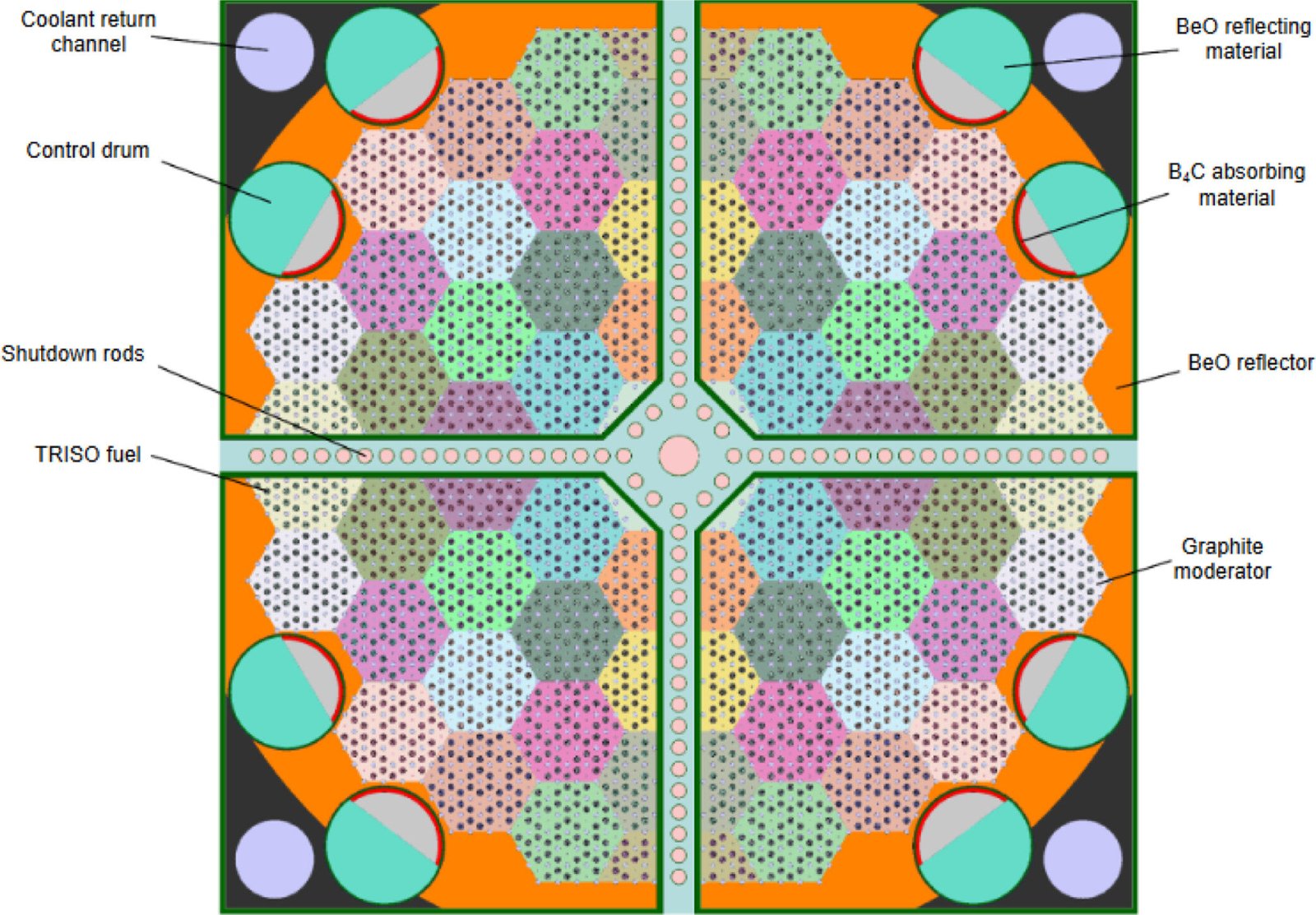
The study demonstrates pyMAISE’s capabilities in three scenarios including a reactor design use case and two safety monitoring applications. First, helping fine-tune the design for a nuclear microreactor, the package leveraged a simulated dataset to model how design parameters impact power output.
In two safety-related scenarios, pyMAISE created models for predicting a safety critical parameter for power levels in nuclear reactors, known as the critical heat flux, and detecting faults in electronic systems to help address equipment issues ahead of time.
In all three cases, pyMAISE performed on par or better than comparable automatic machine learning benchmarking libraries including Auto-Sklearn, AutoKeras and H2O. The package often explored more models, sometimes with fewer training samples.
“We were astonished to see pyMAISE’s level of versatility from these case studies. The package could go from one machine learning application to another with completely different data and physics and still find models that really capture the idea of what’s going on,” said Patrick Myers, a doctoral student of nuclear engineering and radiological sciences at U-M and the first author of the study.
Importantly, pyMAISE includes preliminary explainability features, a rarity in the machine learning field. Given a model, the package can determine which inputs are the most important in determining the output.
“As pyMAISE continues to develop, we’d like to open the black box a bit more to expand our understanding of the models’ inner workings,” said Nataly Panczyk, a doctoral student of nuclear engineering and radiological sciences at U-M and a contributing author of the study.
This work has the potential to benefit fields beyond nuclear engineering as more interpretable AI models are necessary for adoption in any safety-sensitive industry including health care or finance.
More information:
Patrick A. Myers et al, pyMAISE: A Python platform for automatic machine learning and accelerated development for nuclear power applications, Progress in Nuclear Energy (2024). DOI: 10.1016/j.pnucene.2024.105568
pyMAISE is open source with the documentation and repository available.
University of Michigan College of Engineering
Citation:
Streamlining AI development for transparent nuclear engineering models (2025, January 22)
retrieved 22 January 2025
from https://techxplore.com/news/2025-01-ai-transparent-nuclear.html
This document is subject to copyright. Apart from any fair dealing for the purpose of private study or research, no
part may be reproduced without the written permission. The content is provided for information purposes only.