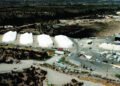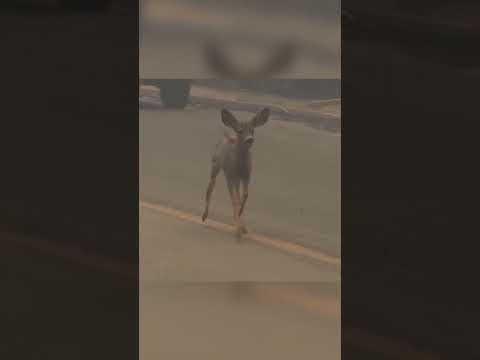
People weren’t the only ones fleeing fast-moving flames and hot embers as deadly wildfires burned down entire neighborhoods in Los Angeles beginning on Tuesday night and ongoing as of publication. Footage from NBC LA showed a fawn with singed fur running down the middle of a deserted street in Altadena with no doe in sight as the Eaton Fire burned. Later that night, camera crews from ABC 7 spotted a mountain lion and two cubs running across Topanga Canyon Boulevard away from the Palisades Fire.

The fires, which were still blazing as of Friday, have killed at least 10 people and destroyed at least 10,000 structures throughout greater Los Angeles. High Country News talked with Miguel Ordeñana, a wildlife biologist and environmental educator at the Natural History Museum of Los Angeles County, about the compounding threats wildlife fleeing wildfires face, and what people can do to help. Bobcats, cougars, coyotes, birds, bats and more all live in the region. Slow-moving creatures like snails and salamanders, wildlife that require specific habitats, nocturnal critters forced to move during the daytime, and animals with young are some of the most vulnerable. “I think a lot of people don’t think about our neighborhoods as ecosystems and habitats, but here, they really are,” Ordeñana said.

This conversation has been edited for length and clarity.
High Country News: When it comes to wildlife, what are some of the most important short-term threats? Smoke inhalation? Burns? Habitat destruction?
Miguel Ordeñana: It’s this domino effect that people don’t think about. Yes, they get physically burned or injured or killed by the fire itself. Just like us, they suffer from smoke-inhalation problems. But then, once you get a step beyond that, there are so many impacts that the fire can have on their population’s sustainability. You might not see the immediate effects right now, but you might see it within a few months or years.
Territorial animals, especially, are wary of going anywhere outside the territory because of the social dynamics they have within their populations. It takes a lot for them to decide to risk their lives to leave. It’s a very vulnerable situation for them because they picked that territory for a reason. Now, they’re forced to evacuate those areas because of the fire and go somewhere with unknown dangers. For instance, if you’re a bobcat with kits, you might go to a coyote hotspot, and that’s where the coyotes are waiting to pounce. That’s why you didn’t choose that territory in the first place. It’s putting animals in really bad spots, especially with their young.
HCN: How are the Palisades and Eaton fires different from other wildfires?
MO: What’s so unique about this fire, and why it’s so devastating to not just wildlife and habitat, but also people, is that it’s spread into so many human structures. Even the most resilient species that are able to cohabitate in urban areas with people are losing their refuge.
HCN: You study bats, among other animals. Are there any specific concerns for them?
MO: There are only so many places that they’re able to survive. Already, even when there’s no fires, they’re having to use the freeway underpasses. And if those places are getting burned and aren’t safe anymore — whether that’s trees or roofs — then it’s going to be really tough for them to survive. Yes, they can fly, but fly where? These unexpected events can be really devastating to the population.
HCN: What are the long-term concerns when it comes to habitat in the area?
MO: (One) thing that comes to mind is the hard work of land managers that have been conserving habitat, creating habitat linkages and corridors and restoring habitat in affected areas. These are a lot of volunteer efforts as well. All of that is going up in flames.
HCN: I’ve seen suggestions that people leave out extra water in their yard for wildlife passing through right now. What else can people do to help?
MO: Stay vigilant and be aware that animals are being affected. If you see animals in distress in places that you don’t normally see them, you hopefully have a little bit more tolerance. That doesn’t mean you intervene specifically but call a professional, and hopefully they have the capacity. Know the number to your local animal rehabilitator.
HCN: Is there anything else you’d like to add?
MO: Recovery is the next step. Recovery of our livelihoods and our homes and all that is very important and the first priority. But part of bringing back L.A. is making sure that we’re also considering wildlife, nature and habitat. Because if that doesn’t come back, and that’s not being supported, then L.A. is not going to be what it was. It’s already not going to be what it was.
“…part of bringing back L.A. is making sure that we’re also considering wildlife, nature and habitat.”
This story is part of High Country News’ Conservation Beyond Boundaries project, which is supported by the BAND Foundation.