

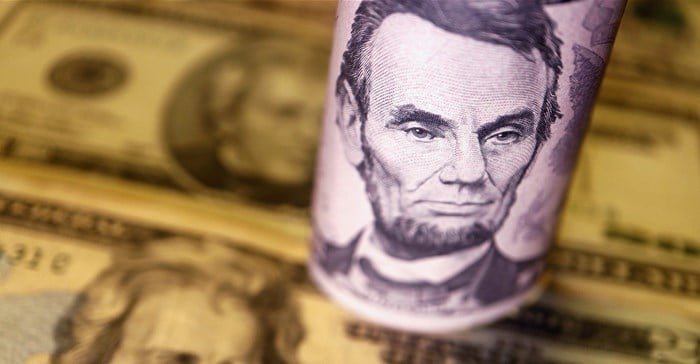
The recent US election has brought a lot of uncertainty into international financial markets, and emerging markets, to which South Africa and the rand are no exception, being one of the more vulnerable markets when faced with sudden change.

Source: Reuters.
When markets are confronted with uncertainty, there is usually a flight of funds towards safe-haven assets, and when the US dollar starts to appreciate, emerging-market currencies can suffer at the hands of perceptions of risk.
With the rand already sensitive to global shifts, ambiguity is now adding to this volatility because of Trump’s policies.
When markets are in “risk-off” mode, which they currently are, investors seek stability. Stability is often seen through demand for safe-haven currencies such as the US dollar; this very factor drives its value higher, weakening emerging-market currencies like the rand as capital outflows occur.
This is not a phenomenon peculiar to the rand or South Africa but a general trend within the emerging markets, which are normally more sensitive to events in major economies, and whose currencies also tend to be more volatile.
For the moment, with no clear idea of what economic policies Trump will pursue, market participants are essentially taking wild guesses, hence volatility, while the increased premium for risk has driven up the prices of EMs.
Tariffs, inflation, vulnerability
Of all the most important policies that could have a very significant effect on global markets, Trump’s attitude to trade tariffs is one. The implementation of his pre-election pledge of imposing tariffs with most especially those countries where the US is running huge trade deficits may lead to inflationary pressure within the US and on the international level.
Because of increased tariffs, higher costs for the importation of goods could stoke higher inflation in the US. In such conditions of rising prices, the Fed would definitely try to curb inflation through increasing interest rates, but the catch is that high interest rates in the United States will have worse implications for the rand: the stronger dollar encouraged by higher interest rates could make US investments relatively more attractive and pull capital away from emerging markets, depressing the rand further.
Furthermore, tariffs and trade restrictions could be contagious, spilling further into global supply chains and trading relations. This would also contribute to the inflationary pressures worldwide because the businesses would then confront higher input costs.
It is hereby expressed that such a scenario would be disastrous for South Africa, an emerging market dependent on international trade and foreign investment, because this would disrupt the country’s economic stability.
This would send a chain reaction by inflation rates, which in turn would make foreign capital, which is so hard for South Africa to attract, more difficult and could raise its borrowing costs, further depreciating the rand.
Debt, dollar, dilemma
On the other hand, there is also Trump’s plan to increase government spending, particularly on infrastructure, which could result in increased national debt.
This is a debt that can be managed sustainably only with the help of a weak dollar, which would render debt repayments relatively less expensive. However, a weak dollar policy would run directly against the tariff-related inflationary pressures that might push the Fed toward rate increases.
This is the contradiction of inflationary tariffs with the need for dollar weakness, which can mean further market turbulence as investors balance these opposing pressures within the US economy.
The uncertainty for the emerging markets is translating into a volatile dollar and unpredictable rate action. Fed decisions, in light of a balancing act between stable economy and inflation, might mean changing capital flows to the emerging markets, and that does present greater risks to the economies such as South Africa.
Volatility in the rand should, therefore, be expected to continue, with the market pricing in Trump’s policy directions and their implications for interest rates, inflation, and the dollar.
Domestic stability strengthens
Yet, it is relevant to emphasise that not all of the rand’s movements are based on exogenous factors. Domestic issues present a large and leading role in determining the strength of the rand, and South Africa has gone through some of its best news recently.
After the period of political uncertainty, South Africa has managed to stabilise its risk premium with fewer instances of load shedding in the past five months and some stabilisation in the political arena. This has managed to give the rand some foothold in helping it buffer against external shocks.
This is because, being an emerging market currency, the rand is generally susceptible to a change in investor psyche. This makes it a double-edged sword – a condition that can be risky or opportunistic – depending, of course, on prevailing broader economic conditions.
With the still-pending need for concrete policy details from the Trump administration, the rand might remain feeble. Going forward, the economic outlook for South Africa will not only be at the mercy of global factors but dependent upon the government’s ability to maintain domestic stability, attract investment, and improve energy security.
In conclusion; until Trump’s policies become crystal clear, market volatility will be the order of the day, with the rand caught in the crosswinds of global economic shifts.
In this scenario, upward pressure on the EM currencies will continue if the US pursues a high tariff and high expenditure path. The rand will need to be resilient to such uncertainties entailing vigilance about global factors but, more importantly, it will take proactive internal economic reforms to attract sustainable investment into the country.


