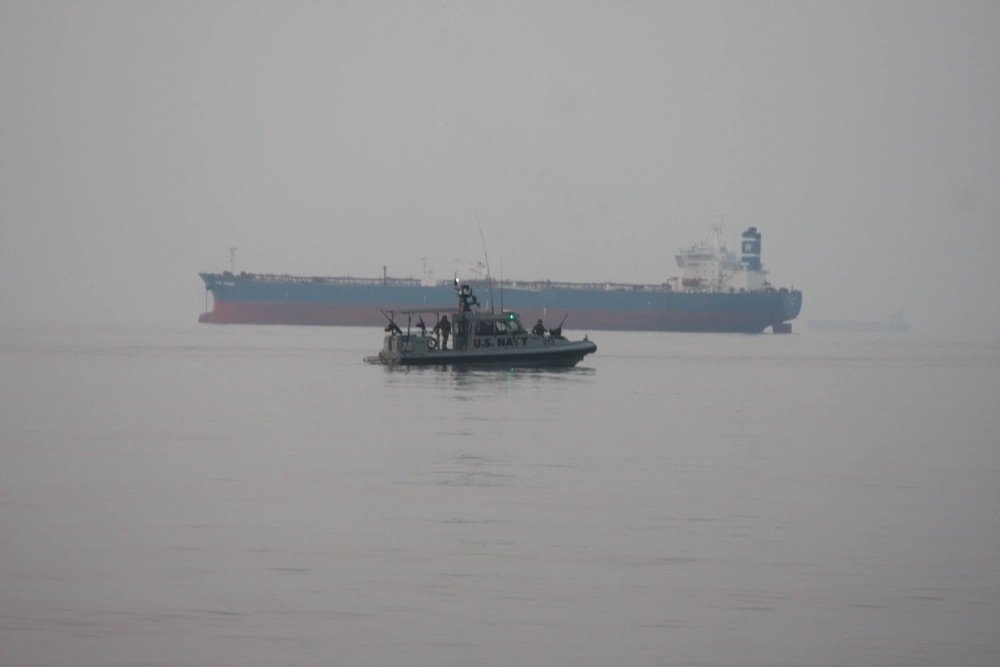

We live in an era of intensifying great power competition and increasing geostrategic risk. There are large land wars in Eastern Europe and the Levant. Sea lanes and global commons are increasingly contested, perhaps most notably in the Red Sea. China is dominating international maritime trade and global shipbuilding.
The United States has only belatedly awoken to its supply chain vulnerabilities during the COVID-19 pandemic, in no small part because less than 1 percent of its foreign trade moves on US-flagged vessels.


Why does this matter?
The US merchant marine is critical to supporting our military in times of conflict. America relies on its US-flag fleet and merchant mariners to move personnel, equipment, and other supplies around the world. But we simply are not keeping up with our adversaries. Compare, for example, China’s 1.7 million seafarers to our 12,000 American merchant mariners.
While China is being intentional in its strategy, the United States stands effectively strategically idle, creating a national security vulnerability threatening our readiness and deterrence as well as our economic security.
National Maritime Strategy
The good news is a group of bipartisan lawmakers in Washington recognizes this threat. In May, Senators Mark Kelly (D-AZ) and Marco Rubio (R-FL), together with Representatives Mike Waltz (R-FL) and John Garamendi (D-CA), authored a bipartisan report calling for a National Maritime Strategy. Such a strategy is long overdue and should be included in the National Defense Authorization Act.
While the Kelly-Waltz report is the start of a long-overdue conversation in Washington, our warfighters do not have time to wait. There is an immediate need for Congress to address the national maritime security gap that is made clear in the report.
Congress should start by fortifying the Maritime Security Program (MSP), which maintains a fleet of vessels in international trade that are both commercially viable and militarily useful, by ensuring the fleet can continue to be internationally competitive through an increased stipend.
The MSP fleet also helps ensure an adequate pool of merchant mariners that can crew the government-owned reserve fleet in time of need.
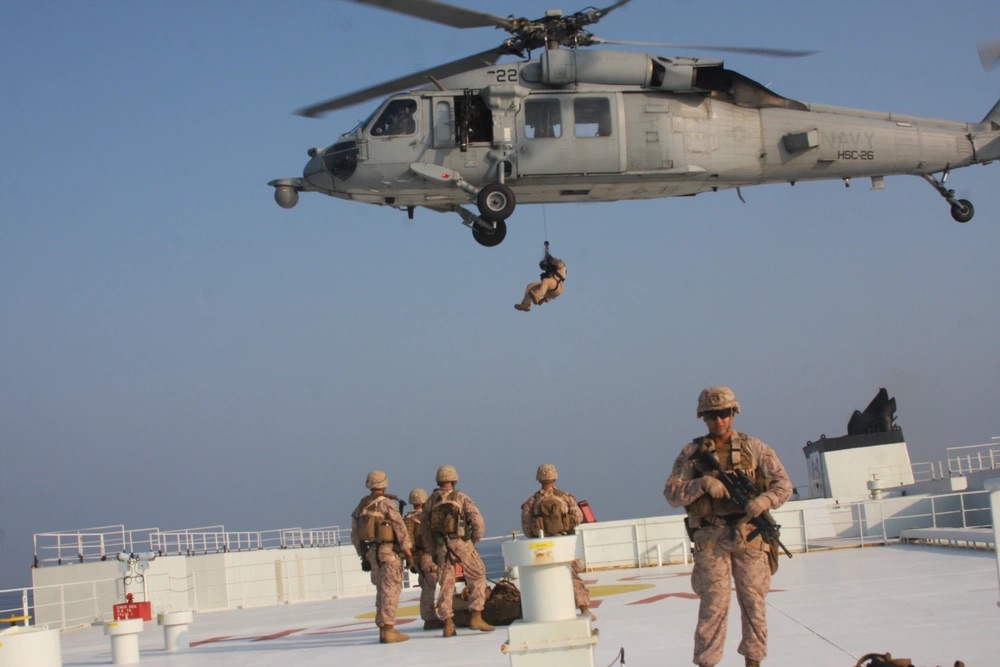
MSP vessels are responsible for the movement of American tanks, heavy vehicles, helicopters, and other equipment critical to supporting America’s military. All US-flag vessels entered in MSP are owned by American companies and crewed by American mariners.
MSP assures access to 60 American ships and more than 2,400 trained merchant mariners for the military by defraying the higher costs of operating US-flag vessels. For $318 million per year, the MSP fleet provides a sealift and a global multimodal network that would cost tens of billions of dollars for the government to replicate on its own.
Congress has wisely reauthorized the MSP until 2035. But since the reauthorization in 2019, the value of the stipend has been eroded by the worst inflation in 40 years and increased supply chain and labor costs exacerbated by a host of “black swan” events. The House has proposed an increase in the MSP stipend in the FY25 defense bill to deal with these growing costs and ensure capacity, and Congress should adopt it and fund it.
Prioritizing US-Flag Shipping
Congress should also ensure an adequate base of cargo for US-flag carriers to increase demand for investment in US merchant capacity. Over the last 30 years, government cargo levels have fallen by nearly two-thirds.
Carriers must match supply and demand and without more cargo, there will not be investment in additional capacity, which means fewer jobs for American mariners.
America can reverse this decline by encouraging cargo shippers to prioritize US-flag shipping as part of their global supply chains. Shipping on US-flag vessels means we will not have to rely on foreign ships to help our military in case of war or supply chain conflict.
Over the past 120 years, Congress has relied upon laws to set aside certain government cargo for American ships. Congress should increase the civilian agency cargo preference requirement to 100 percent from today’s 50 percent to match the military cargo requirement.
This change alone could add ships to the US fleet. It would also be prudent to consider other cargo programs and tax policies to increase the utilization of the US-flag fleet.
Act Before Potential War
Maritime legislation has repeatedly been strengthened in the immediate aftermath of the nation’s wars, which tend to expose logistics vulnerabilities and remind policymakers of the need for a robust US-flag fleet.
For example, after Desert Shield/Storm, Congress created the MSP, later complemented by the Voluntary Intermodal Sealift Agreement. But Congress did not make any major updates to our maritime laws in recent decades, despite the readily apparent value of US-flag commercial carriers carrying nearly 100 percent of all surface-borne cargoes to Afghanistan and the ongoing increase in NATO activities in Europe.
The world has changed dramatically since 1996. Back then, the United States was the undisputed hegemon and the idea of a challenge from China was not on the horizon.
This time, Washington should act before a potential war to ensure America can appropriately respond should we not be able to avoid war, as well as better secure our global supply chain and economic security.
 Eric Ebeling is CEO of American Roll-On Roll-Off Carrier Group.
The views and opinions expressed here are those of the author and do not necessarily reflect the editorial position of The Defense Post.
The Defense Post aims to publish a wide range of high-quality opinion and analysis from a diverse array of people – do you want to send us yours? Click here to submit an op-ed.