- The firms exploit legal loopholes to steal, they exploiting gaps in beneficial ownership laws to repatriate billions of profits in the mining sector
- According to the report, Kenya’s mining industry has the potential to contribute 4-10 percent of the country’s gross domestic product.
- The country earned Sh300 billion from the mining sector last year.
Corrupt individuals in Kenya are exploiting gaps in beneficial ownership laws to repatriate billions of profits in the mining sector, limiting its contribution to the general economy.
A new report released by the Global Financial Integrity (GFI) dubbed ‘Illicit Financial Flows Related to Beneficial Ownership in the Mining Sector in Kenya’ regrets that several billions have been lost over the years.
According to the report, Kenya’s mining industry has the potential to contribute 4-10 percent of the country’s gross domestic product.
“Unfortunately, the sector contributes less than a percentage of the country’s GDP which is significantly low,” the report reads in part.
The country earned Sh300 billion from the mining sector last year. Some of the IFFs noted by the integrity firm include mis-invoicing, undervaluing the amount of exported minerals, and tax evasion among others.
“Kenya’s mining sector offers the potential to drive economic growth and development. Nevertheless, it confronts substantial obstacles and hazards, including illicit cash flows, adverse environmental effects, and regulatory deficiencies.”
According to the report, there are no publicly accessible records to indicate the level of compliance for the existing mining companies in the country.
Read Also: Tanzania’s Mining Act Amendments: Navigating Future Prospects and Challenges
Another pivotal issue concerning IFFs in the mining industry is the low transparency of beneficial ownership information, which results from hiding true owners behind assets and revenues.

The report says that this opacity helps in the misuse of discretionary influence by economic and political elites, which may result in illicit fund transfers outside their country through rent-seeking and corruption.
Exploit Legal Loopholes to Steal
In addition, the inability to properly enforce AML laws and regulations surrounding mining presents a major problem for addressing IFFs resulting from mining activities.
“This leads to situations of money laundering and hiding ill-gotten wealth from mining operations, causing IFFs.”
Along with Kenya, the report says that the terrorist funds to Somalia are often seen as a major destination of proceeds related to piracy in the Indian Ocean and transit for monies received from the mining sector.
Even though there are initiatives such as setting up the Financial Reporting Centre (FRC) in 2012 to fight illicit financial acts, evidence of governmental corruption proves a challenge.
This could include irregularities in contract awards and racketeering that lead to the outward flow of funds associated with mining.
“In addition, international corporations partaking in the mining industry may use abusive transfer classification shifting money out of the country to low tax jurisdiction creating IFFs.”
Furthermore, in Kenya, the absence of a capacity to administer complex laws and regulations is creating an opportunity for multinational corporations to benefit from loopholes hence outflows of funds associated with mining.

For many countries, the estimates of IFF in Africa by GFI are several times above the accounting threshold for materiality – 5 per cent which indicates high financial flows from the continent.
Statistics of illegal flow in the mining sector from WBR and HMN show high ranges.


Both methodologies are critical for detecting shifts in the international corporate tax base and current account, which would help illuminate IFF’s scale regarding its impact on national income distribution.
In Kenya’s mining industry, trade mis-invoicing and transfer pricing manipulation may lead to such practices as shifting undeclared income from which IFF is enabled.
“These IFFs can draw on subsidy regimes, avoid capital controls, or conceal income/profit producing considerable hidden outflow that represents the scale of unreported incomes,” the report reads.
The measurement of illicit financial flows is quite difficult given the difficulties associated with determining and measuring these activities such as unrecorded movement of cash from a nation, underreporting outflows and sales production transfer, mispricing as well as tax evasion.
The estimates provided by GFI are based on different analytical approaches for the balance of payments and international trade data, thus facilitating the assessment of illicit financial flows from developing countries in terms of size.
Based on the study “Trillion Dollar Estimate: The article “Illicit Financial Flows from Developing Countries” by Volker Nitsch, it is obvious that calculating illicit financial flows (IFF) is a complex and difficult process.
According to the report, identifying and quantifying illicit activities like money laundering by moving cash unrecorded out of a country is hard to ensure due to the absence of formal information as well as the application of economic tools towards statistical models that are performed on accessible data.
On the other hand, there is assurance that IFFs exist and Kenya is not an exception among developing countries.
The report cites the evidence presented in Ethiopia’s study of Kenya trade, analysis of tax evasion and proper rate can be observed, confirming a positive relationship between tax rate and evasion, with a comparably estimated elasticity of imports into Tanzania and close to zero elasticity for Kenya.
This evidence indicates that the tax rate is involved in trade between Ethiopia and Kenya
In addition, the links between tax rates and evasion will vary depending on product attributes as well as ways through which importers from Ethiopia avoid taxes.
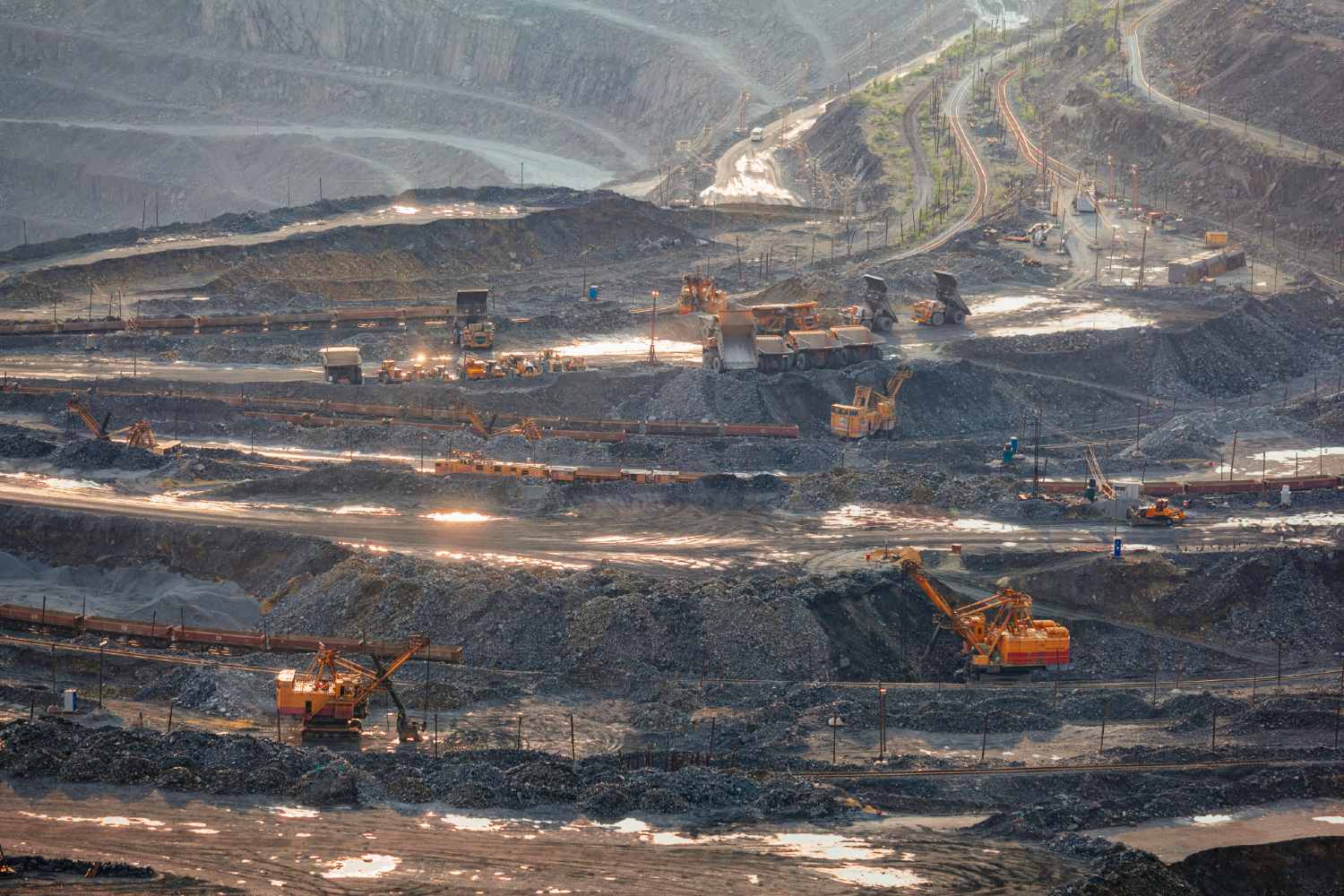
A study shows that mining firms around the world transferred over $850 billion in profits, largely to countries with a tax rate below 10 percent in 2017.
It also offers a logarithmic function as an alternative model for the relationship between profits and tax rates which is non-linear.
In the study, as presented based on OECD data, it is noted that profit shifting out of African nations such as Kenya for tax avoidance escalated with a misalignment model.
This shows that there could be serious profit diversion from Kenya into other countries thereby causing financial flows out of the country in an illicit manner.
However, the analysis of profit-shifting strategies shows that some countries such as Kenya witness a phenomenon known as outward profit shifting which probably drives illicit financial flows.
Furthermore, the results indicate that when they shift profits, LOCs like Kenya see higher revenue loss than total tax revenues.
Read Also: Mining in Africa: Leveraging Sustainability in the African Mining Sector