

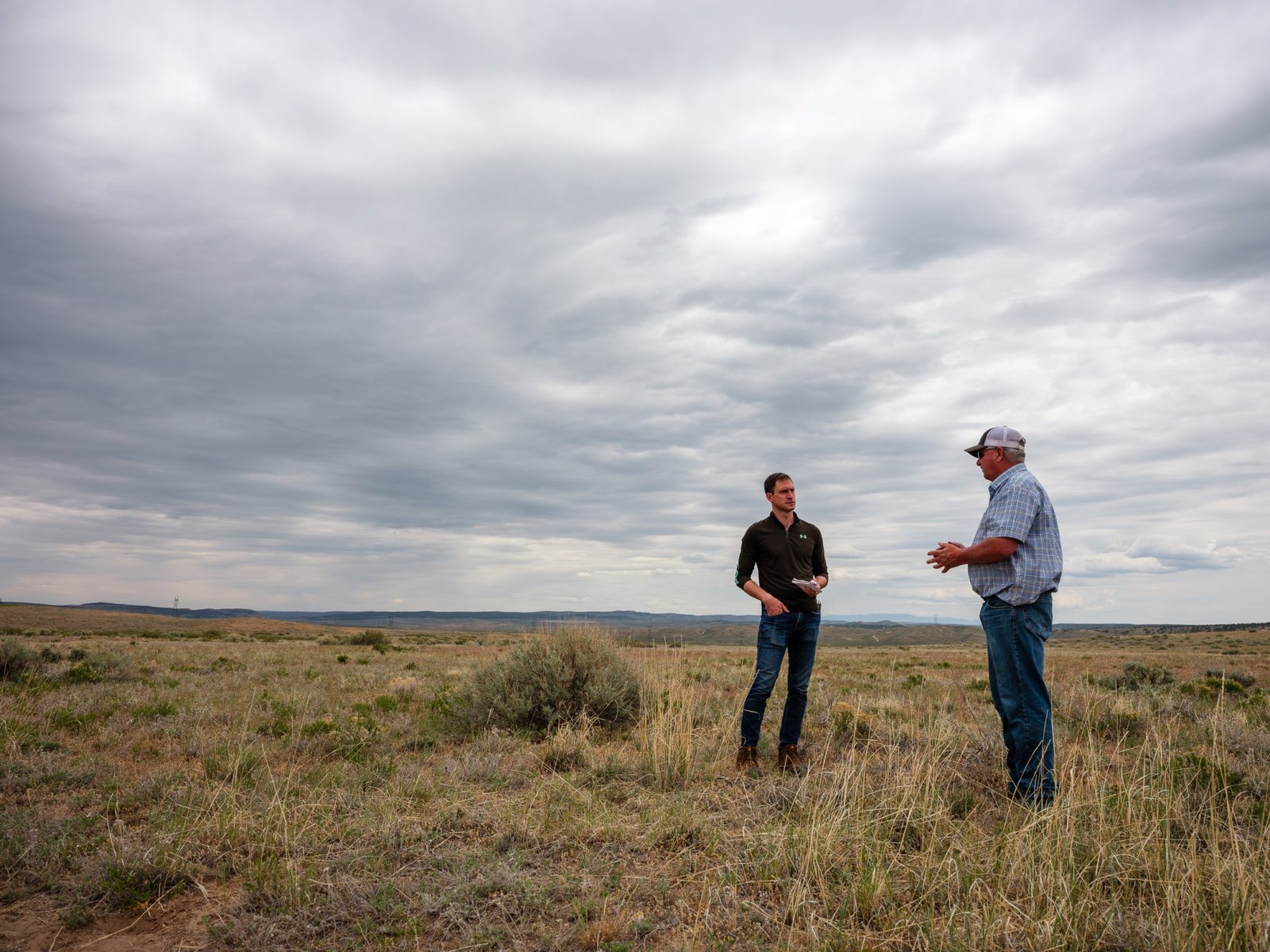

The federal government allows livestock grazing across an area of publicly owned land more than twice the size of California, making ranching the largest land use in the West. Billions of dollars of taxpayer subsidies support the system, which often harms the environment.
As President Donald Trump’s administration pushes a pro-ranching agenda, High Country News and ProPublica investigated how public lands ranching has evolved. We filed more than 100 public record requests and sued the Bureau of Land Management to pry free documents and data; we interviewed everyone from ranchers to conservationists; and we toured ranching operations in Arizona, Colorado, Montana and Nevada.
The resulting three-part investigation digs into the subsidies baked into ranching, the environmental impacts from livestock and the political clout that protects this status quo. Here are the takeaways from that work.
The system has evolved into a subsidy program for ranchers.
The public lands grazing system was modernized in the 1930s in response to the rampant use of natural resources that led to the Dust Bowl — the massive dust storms triggered by poor agricultural practices, including overgrazing. Today, the system focuses on subsidizing the continued grazing of these lands.
The BLM and Forest Service, the two largest federal land management agencies, oversee most of the system. Combined, the agencies charged ranchers $21 million in grazing fees in 2024. Our analysis found that to be about a 93% discount, on average, compared with the market rate for forage on private land. We also found that, in 2024 alone, the federal government poured at least $2.5 billion into subsidy programs that public lands ranchers can access. Such subsidies include disaster assistance after droughts and floods as well as compensation for livestock lost to predators.
Ranching is consolidated in the hands of some of the wealthiest Americans.
A small number of wealthy individuals and corporations manage most livestock on public lands. Roughly two-thirds of the grazing on BLM acreage is controlled by just 10% of ranchers, our analysis found. And on Forest Service land, the top 10% of permittees control more than 50% of grazing. Among the largest ranchers are billionaires like Stan Kroenke and Rupert Murdoch, as well as mining companies and public utilities. The financial benefits of holding permits to graze herds on public lands extend beyond cattle sales. Even hobby ranches can qualify for property tax breaks in many areas; ranching business expenses can be deducted from federal taxes; and private property associated with grazing permits is a stable long-term investment. (Representatives of Kroenke did not respond to requests for comment, and Murdoch’s representative declined to comment.)
The Trump administration is supercharging the system, including by further increasing subsidies.
The administration released a “plan to fortify the American Beef Industry” in October that instructed the BLM and Forest Service to amend grazing regulations for the first time since the 1990s. The plan suggested that taxpayers further support ranching by increasing subsidies for drought and wildfire relief, livestock killed by predators and government-backed insurance. The White House referred questions to the U.S. Department of Agriculture, which said in a statement, “Livestock grazing is not only a federally and statutorily recognized appropriate land use, but a proven land management tool, one that reduces invasive species and wildfire risk, enhances ecosystem health, and supports rural stewardship.” Roughly 18,000 permittees graze livestock on BLM or Forest Service land, most of them small operations. These ranchers say they need government support and cheaper grazing fees to avoid insolvency.
The administration is loosening already lax oversight.
Ranchers must renew their permits to use public lands every 10 years, including undergoing an environmental review. But Congress passed a law in 2014 that allows permits to be automatically renewed if federal agencies are unable to complete such reviews. In 2013, the BLM approved grazing on 47% of its land open to livestock without an environmental review, our analysis of agency data showed. (The status of about an additional 10% of BLM land was unclear that year.) A decade later, the BLM authorized grazing on roughly 75% of its acreage without review.

This is in large part because the BLM’s rangeland management staff is shrinking. The number of these employees dropped 39% between 2020 and 2024, according to Office of Personnel Management data, and roughly 1 in 10 rangeland staff left the agency between Trump’s election win and last June, according to BLM records.
The system allows widespread environmental harm in the West.
The BLM oversees 155 million acres of public lands open to grazing, and assessments it conducts on the health of the environment found that grazing had degraded at least 38 million acres, an area about half the size of New Mexico. The agency has no record of land health assessments for an additional 35 million acres. ProPublica and High Country News observed overgrazing in multiple states, including streambeds trampled by cattle, grasslands denuded by grazing and creeks fouled by cow corpses.
Ranchers contend that public lands grazing has ecological benefits, such as preventing nearby private lands from being sold off and paved over. Bill Fales and his family, for example, run cattle in western Colorado and have done so for more than a century. “The wildlife here is dependent on these ranches staying as open ranch land,” he said. While development destroyed habitat nearby, Fales said, the areas his cattle graze are increasingly shared by animals such as elk, bears and mountain lions.
Regulators say that it’s difficult to significantly change the system because of the industry’s political influence.
We interviewed 10 current and former BLM employees, from upper management to rank-and-file rangeland managers, and they all spoke of political pressure to go easy on ranchers. “If we do anything anti-grazing, there’s at least a decent chance of politicians being involved,” one BLM employee told us. “We want to avoid that, so we don’t do anything that would bring that about.” A BLM spokesperson said in a statement that “any policy decisions are made in accordance with federal law and are designed to balance economic opportunity with conservation responsibilities across the nation’s public lands.”
The industry has friends in high places. The Trump administration appointed to a high-level post at the U.S. Department of the Interior a lawyer who has represented ranchers in cases against the government and owns a stake in a Wyoming cattle operation. The administration also named a tech entrepreneur who owns a ranch in Idaho to a post overseeing the Forest Service.
Moreover, politicians from both parties are quick to act if they believe ranchers face onerous oversight. Since 2020, members of Congress on both sides of the aisle have written to the BLM and Forest Service about grazing issues more than 20 times, according to logs of agency communications we obtained via public records requests.
>> Read our full investigation of the federal public lands grazing system.
We welcome reader letters. Email High Country News at editor@hcn.org or submit a letter to the editor. See our letters to the editor policy.



