

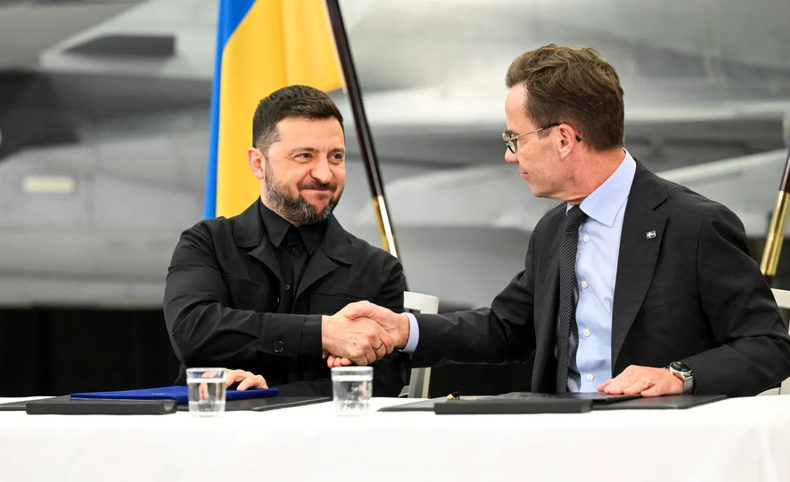
Sweden will phase out development aid to five countries – Zimbabwe, Tanzania, Mozambique, Liberia and Bolivia – in the coming years as Stockholm redirects resources toward Ukraine, the Swedish government announced on Friday.
Minister for International Development Cooperation and Foreign Trade Benjamin Dousa said the shift was necessary to meet Sweden’s growing foreign-policy commitments.
“Ukraine is Sweden’s most important foreign policy and aid policy priority and therefore the government is going to increase aid to Ukraine to at least $1.06 billion in 2026,” he said, adding pointedly: “There isn’t a secret printing press for banknotes for aid purposes and the money has to come from somewhere.”
According to the government, the redirection of funding will free up more than 2 billion Swedish crowns over the next two years, resources that will be channelled into projects such as rebuilding Ukraine’s energy infrastructure.
Although Sweden remains a significant global donor, contributing roughly 56 billion crowns annually over the past three years, it plans to reduce that figure to 53 billion crowns per year for 2026–2028 while also shifting part of the aid budget toward immigration-related costs.
A broader reckoning for African aid-dependent economies
For countries such as Zimbabwe, Tanzania and Mozambique – states grappling with weak fiscal buffers, high unemployment, and post-pandemic slowdowns, Sweden’s withdrawal comes at a time when global aid flows are already under strain.
This trend mirrors broader realignments in donor countries, including the United States.
Under President Donald Trump’s assertive “America First” development posture, Washington has increasingly pushed for aid programs that emphasise “self-reliance,” scaled-back funding envelopes, and tighter conditionalities.
The recent restructuring of U.S. global health and development initiatives, including reduced engagement in several African states following the dismantling of USAID structures reflects the same pattern of shrinking external support for traditional beneficiaries.


