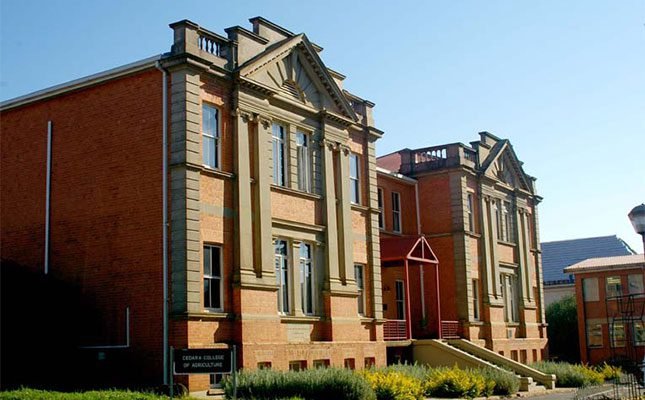
Cedara College of Agriculture in KwaZulu-Natal, a training institute and research station, was established in 1905 on 1 542ha of land bought by the then-Natal government.


Photo: Supplied
Located about halfway between Pietermaritzburg and Howick, Cedara is the second-oldest agricultural college in South Africa, after Elsenburg Agricultural Training Institute in the Western Cape.
Named for the bleak, barren, and almost treeless landscape, the college began its first dairy nutrition experiments in 1907. This was followed by more experimental field plots, fertiliser, and field management studies, as well as a forestry nursery where more than 90 000 trees, including gums, pines, and wattles, were planted.
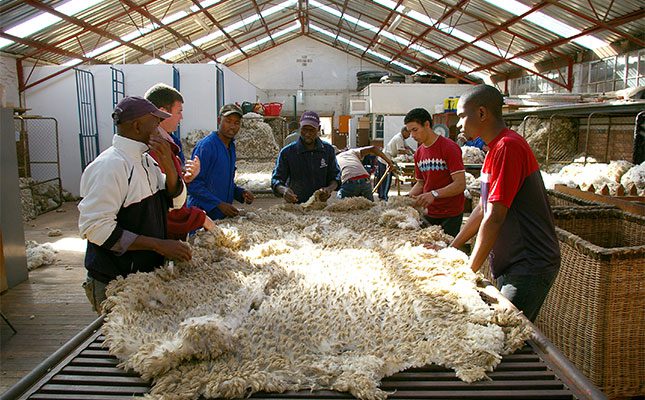
Even today, Cedara’s farmland is utilised by the Agricultural Research Council and universities for their research programmes.
Agricultural courses
Times have changed since the first students worked full days on the farms and attended classes in the afternoon and evenings until ‘lights out’ at 10pm. They enrolled to study subjects such as forestry, farm surveying, and fish husbandry.
These subjects are still taught as part of the college’s three-year Diploma in Agriculture (NQF level 6). Students can specialise in animal production or crop production.
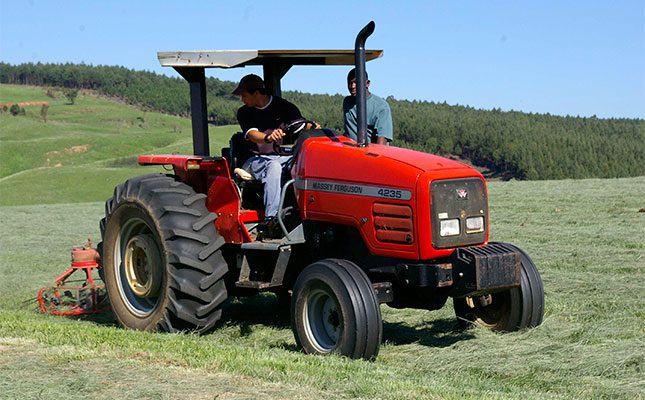
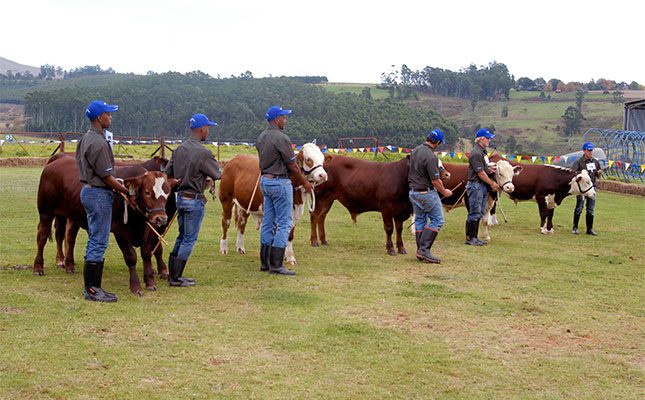
Poultry (intensive and free-range), pig and beef production (intensive and extensive), and sheep farming are taught and practised on the college farms.
First-year subjects include rural sociology, farming systems, animal and plant health, soils, and record-keeping. Depending on a student’s specialised course, subject choice in the second year includes animal breeding and selection, plant propagation and establishment, and farm business management.
In their third year, students may opt for subjects such as game management, poultry production, forestry, and sugar cane production.
Cedara also offers AgriSETA-accredited learnerships in plant and animal production (NQF Levels 2 to 4) and facilitates the Bachelor of Agriculture degree in Agricultural Extension & Rural Resources Management offered by the University of KwaZulu-Natal.
Added to Cedara’s curriculum are short courses that include mushroom production, beekeeping (also available in isiZulu), fruit and vegetable processing, and agrifinance. The short courses are presented in English and are open to the public.
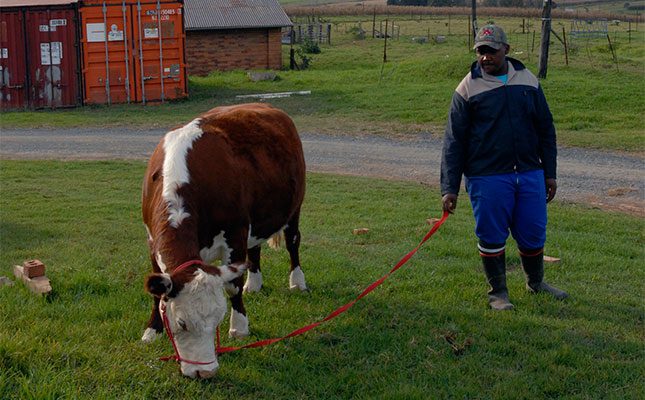
In addition, the institute conducts research, provides advisory services, and is responsible for nature conservation. Cedara is also the site of the KwaZulu-Natal Department of Agriculture and Rural Development’s offices, which render services like plant health diagnostics and perform analyses on soil, compost, manure, and water samples.
In 1998, the college introduced a credit system. A Higher Certificate in Agriculture requires 675 credits, and students must obtain a further 300 credits to qualify for a Diploma in Agriculture.
More female students
Principal Bernd Lütge, who began his career at Cedara as a lecturer, has witnessed many changes in his 30 years at the college.
“We see many more students coming from a non-farming background and, more recently, we are enrolling more Indian students,” he says.
There is also a shift from male-dominated enrolment: “We currently have 160 students enrolled across all qualifications, 46% of whom are female.”
Extramural pursuits are rugby, cricket, netball, soccer, squash, swimming, and tennis. Cedara also has gymnasium facilities, and students participate in canoeing, road running, and golf at external clubs.
Changes and improvements are on the roster. The college has expansion plans for student lodgings, as accommodation is a limiting factor to increasing student numbers.
“The R50 million residence renovation is currently in the final stages, and there is a possibility of utilising other accommodation on Cedara,” explains Lütge.
There is, however, no available accommodation for day students or participants in short courses.
“We offer learnerships for animal and crop production and have also applied to the Quality Council for Trades & Occupations for occupational qualifications in poultry and livestock management,” he adds.
Dedicated marketing
Lütge attributes Cedara’s success to a few factors: “We have a dedicated marketing person and a vibrant social media community where students post about Cedara activities and their practical classes.”
“But, most importantly, the good reputation of our name ‘Cedara’ is synonymous with quality education. This is something we hold dear and continue to maintain quality,” he concludes.
Admissions
Admissions to Cedara are based on a points system, but applications to study at the college in 2026 closed on 31 August.
For the 2027 intake, email applications to [email protected].
Admission into the Diploma in Agriculture course through a recognition of prior learning (RPL) process is available for applicants who do not have a formal qualification. RPL applications must be submitted before 30 June every year.
For more information email Bernd Lütge at [email protected]. To enquire about short courses, email Megan Naidoo at [email protected], or phone 033 3559 304.