A new report from Xodus has found around 100 North Sea reservoirs will be needed to meet UK demand for carbon capture utilisation and storage (CCUS) by 2050.
The report found the volume of carbon dioxide being injected into the North Sea by 2050 will be equal to the natural gas currently being extracted from the basin.
Meeting that CCUS demand will require some 100 reservoirs spanning more than 4,600 miles of new pipelines and dozens of onshore emissions capturing and gather sites.
In its ‘Forecasting the North Sea CCUS infrastructure to 2050′ report, produced in partnership with Subsea7, Xodus assessed 560 potential storage sites, existing North Sea gas pipelines and potential new infrastructure to rank the cost efficiency of different CCUS initiatives.
North Sea ‘heart’ of European economy
Xodus said Europe is the only leading economic region which has its largest hydrocarbon basin at the “heart of its economy”.
Approximately 40% of European industrial emissions are generated within 500km of the North Sea, Xodus said, highlighting the “strategic advantage” in reducing the cost of developing CCUS projects.
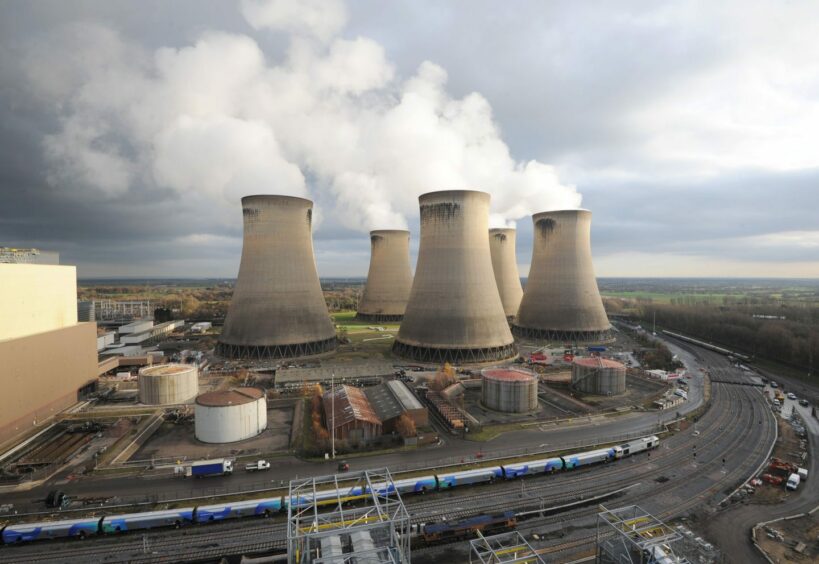 © PA
© PAXodus forecasts nearly all European CCUS projects will initially be focused in the North Sea, though over time this will change.
Based on its high-case estimates for emissions reduction, Xodus said by 2050 the North Sea would retain a 60% market share of a 500 megatonnes per annum (MTPA) market.
While Xodus said emissions will continue to be imported by vessels and long-distance pipelines, the extent will depend on various factors including transportation costs, competing storage sites and societal attitudes towards onshore storage.
Xodus chief executive officer Steve Swindell said pioneering technologies like CCUS are essential to achieving net zero in an “orderly and timely manner”.
“Fortunately, the North Sea’s world-class oil and gas industry provides the perfect foundation for the rollout of carbon capture, with the potential to repurpose and build around existing infrastructure,” Mr Swindell said.
 © Supplied by Big Partnership
“But the outlook for this crucial technology is somewhat vague with many question marks around timing, volume and prime locations for locking away emissions.”
“Our study analyses many of these uncertainties by examining the infrastructure needed to enable deployment at scale.”
Eight European CCUS projects by 2030
Xodus said it expects there to be eight operational CCUS projects in Europe by the end of the decade.
These projects include Northern Lights in Norway and the Viking and Acorn clusters in the UK.
As part of these plans, all carbon stores will be situated near or linked to high emitting regions, Xodus said.
This will offer decarbonisation solutions for “vast swathes of heavy industry”, with developments likely to be supported by direct government subsidies and contracts tied to EU and UK emissions trading schemes.
Xodus head of CCUS James McAreavey said delivering carbon storage projects at the scale Europe needs will require a “Herculean effort”.
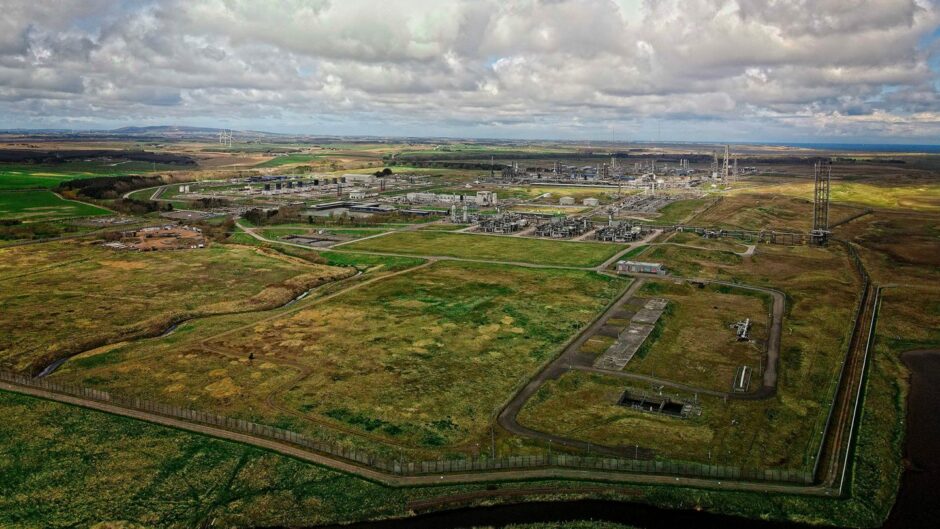 © Supplied by Scottish Cluster
“But the enormous benefits of doing so are obvious,” he said.
“There is the chance to make the most of existing synergies with the offshore oil and gas industry and reuse miles of existing pipelines that may otherwise need to be removed from the North Sea.
“As the transition progresses, it is inevitable that CCUS projects will be competing for seabed area with other low carbon technologies, but that could drive collaboration between industries and lead to the creation of a basin-wide integrated energy system.”
Carbon storage can reuse infrastructure
The Xodus report also said as much as 50-70% of North Sea CO2 storage could reuse existing infrastructure, delivering cost savings and environmental benefits.
However, this figure hinges on a strategic national and cross border infrastructure build-out strategy to ensure key infrastructure is kept in place, Xodus said.
In September, the North Sea Transition Authority confirmed the final list of companies which have accepted licences following the UK’s first ever carbon storage licensing round.
A total of 14 companies have now been awarded 21 carbon storage licences, following the addition of one new licence and two firms since the initial results in May.
Recommended for you