

Corruption may be a universal problem, but its intensity varies widely from one country to another.
Each year, Transparency International takes the temperature of public sector corruption across 182 countries and territories, ranking how clean, or compromised, governance is perceived to be around the world.
While corruption remains a challenge across much of Africa, a few countries defy the trend, led by Seychelles, which ranks as the continent’s least corrupt with a score of 68 and a global position of 24th.
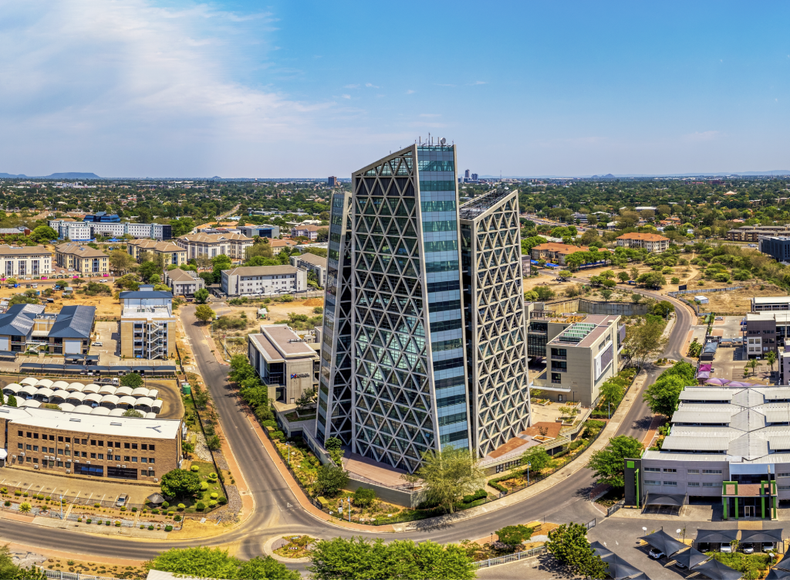
Cape Verde follows closely, earning a score of 62 to rank 35th worldwide, buoyed by steady institutions and political accountability. Botswana, often cited as a governance outlier in the region, scored 58 and ranked 41st globally.
Below are the 10 least corrupt African countries, according to latest ranking:


1. Seychelles (Score: 68)
With a score of 68 and a global rank of 24, Seychelles is the highest-ranking African country on the index, reflecting strong institutions, political stability, and effective governance. Tourism anchors the economy, supported by fisheries and financial services. While its small size limits diversification, Seychelles continues to attract investor confidence.
2. Cape Verde (Score: 62)
Cape Verde scored 62 to place 35th globally, showing its reputation for democratic governance and macroeconomic discipline. The archipelago has built credibility through peaceful political transitions, sound fiscal management, and stable institutions.
3. Botswana (Score: 58)
Botswana recorded a score of 58, ranking 41st, reflecting long-standing institutional strength and political stability. Prudent management of diamond revenues has helped the country avoid the resource curse, funding infrastructure and social services. However, economic growth has slowed in recent years, with high unemployment and heavy dependence on mining weighing on performance.
4. Rwanda (Score: 58)
Rwanda also scored 58, placing it 41st globally, highlighting its reputation for policy efficiency and strong state capacity. The government’s focus on accountability, infrastructure, and ease of doing business has supported steady growth. Kigali has emerged as a regional hub for conferences and services.
5. Mauritius (Score: 48)
Mauritius earned a score of 48, ranking 61st, reflecting solid institutional foundations but rising economic pressures. The country benefits from a strong legal framework and a diversified economy spanning tourism, manufacturing, and financial services.
6. Namibia (Score: 46)
Namibia scored 46 to rank 65th globally, signalling moderate institutional strength alongside persistent structural challenges. The country maintains political stability, democratic governance, and an independent judiciary.
7. Senegal (Score: 46)
With a score of 46 and a rank of 65, Senegal stands out as a relatively stable democracy in West Africa. The country has benefited from infrastructure investment and reform momentum, while oil and gas production is expected to support future growth.
8. Benin (Score: 45)
Benin posted a score of 45, ranking 70th globally, reflecting steady economic reforms alongside governance concerns. The government has focused on infrastructure development, improved tax collection, and port efficiency to support growth.
9. Côte d’Ivoire (Score: 43)
Côte d’Ivoire scored 43 to rank 76th, despite being one of West Africa’s fastest-growing economies. Growth has been driven by agriculture, infrastructure spending, and industrial expansion, with cocoa exports at the core.
10. Ghana (Score: 43)
Ghana also recorded a score of 43, placing it 76th globally, reflecting economic strain following debt restructuring despite a strong democratic record. Fiscal imbalances and high inflation have weighed on performance, prompting IMF-backed reforms to restore stability.



